Andrea Wong/VolkswagenStiftung
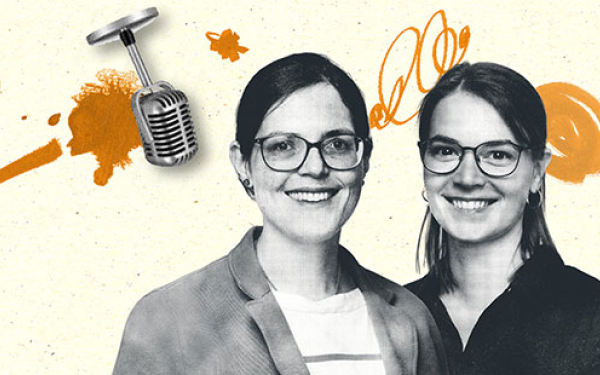
Administration without queues – this could be the outcome of Prof. Dr. Anna Maria Oberländer's 'Change!' project. Her goal: people-centred digital administration.
Who has never experienced the hassle of dealing with government agencies? Appointments are often difficult to schedule and involve seemingly endless waiting times on site. Digitalisation would remedy this situation, but it has not yet arrived in many German government offices. Prof. Dr. Anna Maria Oberländer addresses this issue in her research project "Bridging the Gap: Human-Centric Digital Transformation in Public Administration‘, which the foundation is supporting through its ’Change! Fellowships‘.
Behind the seemingly unwieldy title lies an ambitious project, as Oberländer explains: ’Our main goal is to ensure the state's ability to act in times of democratic scepticism and to contribute to strengthening trust in the state." But how exactly does she intend to do that? She wants to not only analyse the digital transformation of public administration, but also actively shape it – with a focus on people. The researcher brings sufficient expertise from the private sector, where she has already supported major digital transformation processes as a strategy consultant.

Today, Oberländer is an assistant professor of business informatics and digital transformation at the University of Bayreuth and director of the FIM Research Institute for Information Management. She has successfully bridged the gap between practice and research and now wants to use her project to explore what public administration and science can learn from each other. Oberländer wants to develop practical solutions that can also be applied across federal states. In other words, no isolated solutions, but real progress for digital administration in Germany.
She is partnered by Dr Karolina Maronna-Aigner from byte – Bavarian Agency for Digitalisation. Together, they want to bring their findings directly into the everyday lives of administrative staff and citizens. They are focusing on three key areas: faster, simpler and more accessible processes in public administration; digital innovation development; and new digital technologies of the future. ‘To ensure that we take all perspectives into account, we want to actively involve both employees and citizens and listen to them: Where are their pain points? What do they experience in everyday life – and what are their wishes?’ explains Oberländer. ‘We want to hear from all stakeholders and involve them in developing solutions, depending on where the greatest needs are at the moment, in order to then also generate the greatest impact.’