

VolkswagenStiftung
Becoming a Change! Fellow: What Matters in your Application
In the face of innumerous crises, expectations placed on the scientific community are growing: it is expected to develop fact-based courses of action and contribute towards shaping workable solutions. The Foundation’s Change! Fellowships are designed to facilitate transdisciplinary research projects. But what counts when submitting an application, and which projects have already been approved? The programme directors Annabella Hüfler-Fick and Mona Weyrauch explain the requirements.
Wars, crises and conflicts: the world is under constant strain. How can science – and in particular the Foundation’s Change! Fellowships funding initiative – identify potential solutions?
Dr Mona Weyrauch: When it comes to identifying crises and developing response strategies, science plays a vital role. Not only can it decipher the causes of crises: science can also identify factors to pave the way out of a crisis and develop methods to keep them on track.
Through our Change! Fellowships funding initiative in the profile area Social Transformations, we also foster dialogue between science and the general public. After all, a purely scientific perspective is often not enough. Anyone wishing to set change in motion must also heed the perspectives of society at large. Change! enables projects that explore crisis management and provide impetus for change.
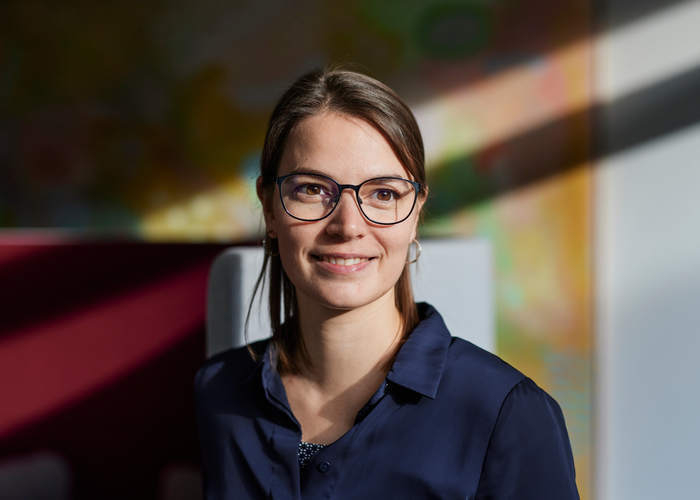
Dr Mona Weyrauch is a programme director in the profile area "Societal Transformations". In this role, she oversees research projects in the natural sciences, life sciences and engineering.
Who is the initiative aimed at?
The Change! Fellowships are aimed at individuals across all academic disciplines whose research aims to shape societal transformation in collaboration with partners outside academia.
Postdoctoral researchers whose PhD was completed at least two and no more than 15 years prior to the deadline of 16 April 2026 are eligible to apply. In addition, junior professors with and without tenure track – both before and after evaluation – are also eligible to apply. A new development is that newly appointed professors may now also submit an application — up to three years after accepting their first post. The funding terms vary depending on the position and employment status. Please refer to our guidelines (PDF, 244.9 KB) for details.
Change! is a funding scheme aimed at individuals – so we are truly interested in the person behind the application and their potential to be an "Agent of Change!". A person who bridges the gap between their strong subject expertise and the real world out there. Excellent scientific findings should contribute to solving societal problems, whether global or closer to everyday life – towards a better, more sustainable, and more liveable future.
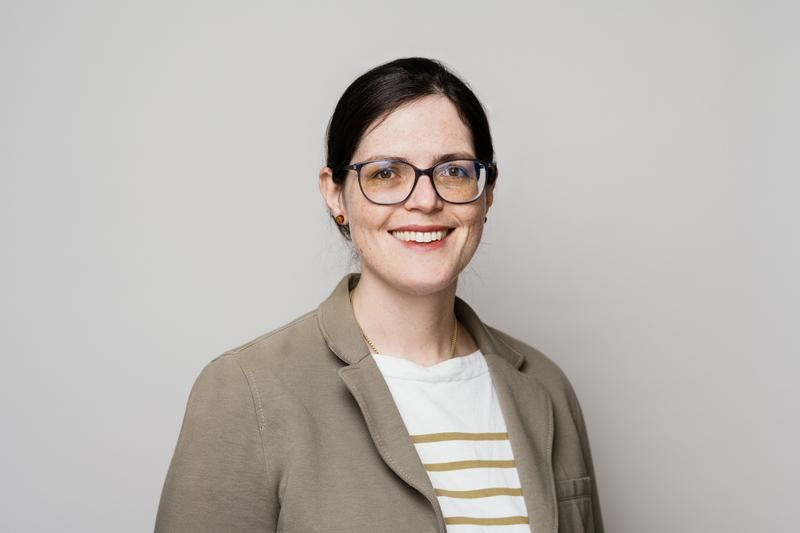
As a programme director in the profile area "Societal Transformations", Dr Annabella Hüfler-Fick oversees research projects in the humanities, cultural studies and social sciences.
Up to now, and in addition to the fellowships, the Change! funding initiative has also supported research groups. Will these now be discontinued?
Weyrauch: Following in-depth strategic discussions and drawing on the experience gained from previous rounds of applications, we have decided to focus on the fellowships. We believe the potential to achieve a forward-looking and structural impact is significantly greater in this area. We are therefore concentrating our efforts and expanding the range of opportunities on offer at the same time. Permanent mid-level faculty, junior professors who have received a positive evaluation, and those newly appointed up to three years after receiving their first post are also eligible to apply under the new call for applications. We also plan to have annual deadlines
As a distinctive feature of the Change! funding programme, you highlight the transdisciplinary approach, namely that stakeholders outside academia are involved in the research projects. What effects do you hope to achieve?
Hüfler-Fick: We fund projects that truly bring academia and members of the public together. The aim of transdisciplinary research is to ensure that findings do not remain on the shelf, but actually exert an impact on society. Our focus is on researching problem areas and developing sustainable solutions that then reach the places where they are needed. In the research projects approved so far, formats such as online learning programmes, exhibitions, parliamentary breakfasts, and documentary films have been developed. At the same time, we want to anchor transdisciplinary research more firmly within the academic system – helping to ensure that reputational frameworks and career paths become more diverse.
In recent calls for proposals, it has become clear that transdisciplinary research can have a special impact when the collaboration between partners is particularly robust. For this reason, in the current call for proposals, we expect applicants to either already have an established partnership or relevant transdisciplinary research experience.
Weyrauch: What we expressly do not wish to fund through Change!, however, are citizen science projects. Partners outside academia should not be viewed merely as data providers or as performing ‘menial tasks’. Rather, the research question should be formulated jointly, work packages clearly defined, and the results disseminated to society at large. All of this must take place on an equal footing. For example, we have approved collaborative projects with judges, government agencies, international NGOs, theatres, and local authorities. This shows just how wide the range of partners outside academia can be.
I would like to make a clear distinction between interdisciplinarity – that is, cooperation between different academic fields – and transdisciplinarity. If the submitted project ideas are also interdisciplinary, that’s great, but the transdisciplinary approach must also be present.
What else should researchers and their external partners bear in mind when submitting an application?
Weyrauch: In the last call for proposals, we received just under 140 applications for the Change! Fellowships. This demonstrates the high level of interest in our funding programme. Therefore, the rule is: if you want to stand out against strong competition, you should combine excellent research with outstanding ideas that are truly novel. The application must demonstrate how the project generates scientific perspectives and insights whilst simultaneously driving social change. Eight of the 140 applicants received funding approval in the last round.

Hüfler-Fick: To ensure that your application meets all the requirements, both in terms of content and form, I recommend reading our guidelines (PDF, 244.9 KB) carefully and making sure you attend our online consultation sessions on the Change! call for proposals. You’ll find all the information there regarding this year’s deadline, as well as details of future deadlines in due course. After all, Change! is now firmly established within our funding framework. Important: given the competitive nature of the process, potential applicants whose idea is not yet fully developed or whose partnership is not yet properly established should think about allowing themselves another year and not finalising their application until the deadline in 2027.
Based on our previous experience, we have made a few changes for the current round. Applicants must now also submit a publication plan and establish a Scientific Advisory Board. As already mentioned, this year we also expect partnerships to be well-established or for applicants to have relevant transdisciplinary research experience.
What advice can you offer to those interested in the application process?
Hüfler-Fick: We are delighted with the wide variety of project ideas submitted in the first two rounds of the call for proposals. This has encouraged us to keep the call open to all disciplines. We also find the range of external partners involved particularly promising for the societal impact we hope to achieve – on both large and small scales – through this funding.
Weyrauch: To select the best applicants, we combine academic peer review with a kind of assessment centre, where, researchers are given the opportunity to demonstrate their strengths in communication, conflict resolution, and leadership. This takes place through role-plays and so-called case studies specifically designed for this purpose. This was a new process for us, but we’ve had very positive experiences getting to know the applicants personally. That’s why we’ll be using it again – with slight adjustments – in the next selection round