Basic Research: Why the Volkswagen Foundation Supports Curiosity
#Basic Research
VolkswagenStiftung
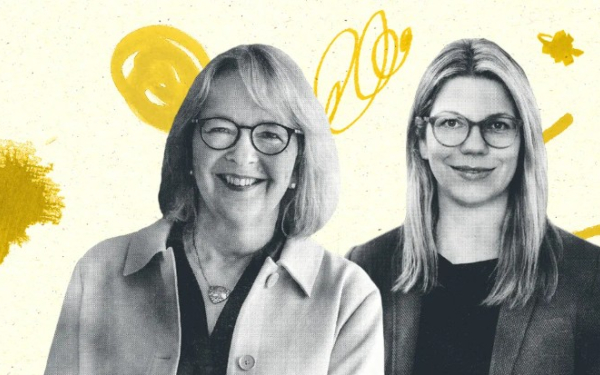
The Volkswagen Foundation has been supporting basic research for decades. Without it, the pipeline for innovation would dry up. Dr Henrike Hartmann, Head of the Funding Division at the Volkswagen Foundation, and microbiologist Professor Dr Tobias Erb discuss why basic research is so important for progress.
Why has the Volkswagen Foundation been funding basic research for decades?
Henrike Hartmann: At the moment, science policy is heavily focused on applied research, innovation and knowledge transfer. There are good reasons for this if we want to generate more value through science in the short term. But if we want to secure innovation in the long term, we also need basic research that is primarily knowledge-driven. It is a question of ‘both-and’; it is about the message: basic research is essential for our future.
Chancellor Friedrich Merz has said: 'Research is not an end in itself. Research must lead to value creation, production and innovation in Germany and in Europe.' He omitted the 'both-and'. Is something slipping here?
Henrike Hartmann: The Chancellor is making a legitimate point. The German Research Council also emphasises the contribution of science to the common good in its paper 'Science 2040'. The crucial thing is that we must think long-term. Benefit can mean bringing results into economic application quickly. But it also means ensuring that new ideas keep emerging which, without being predictable in advance, enable disruptive innovation.
Tobias Erb: As a scientist who carries out a great deal of basic research, I have mixed feelings about this. The very nature of science is hesitation, the gradual approach to insights, and the often long paths towards solving major problems. Politics tends to oversimplify and reduce things to their bare essentials.
I don't believe at all that you can simply separate basic research and applied research like that.
With what consequences?
Tobias Erb: Funding bodies and politicians have a right to ask what happens to their money – it is taxpayers' money. This reminds us that research is a privilege and that we should ensure the knowledge we generate is put to good use. But academic freedom is a precious commodity. 'Funding' must not automatically mean 'steering'. And investments in research cannot always, and certainly not on a one-to-one basis, be translated into economic output. Such expectations create pressure and may lead the scientific community to promise too much too soon.
Henrike Hartmann: I fully understand your concern, because such oversimplifications undermine the logic of the scientific system. Science is not a political tool for solving societal problems. We celebrated how quickly a COVID-19 vaccine became available. But it is now clear what years of groundwork and perseverance lay behind it. Focusing solely on the final stage – the rapid transfer, BioNTech, the success – is a massive oversimplification. It is crucial to see and support the whole chain, not just its end.
Tobias Erb: I don't believe at all that you can simply separate basic research and applied research like that. Because I think it's impossible to conduct basic research without grand visions – without an awareness of what might one day emerge from it and how wonderful that would be.
What is your 'grand vision'?
Tobias Erb: At its core, the question is: how does life arise from the non-living? We are searching for new laws and new principles. For example, we are investigating how microorganisms capture CO2. Our initial focus is on the fundamental processes: how do microbes manage to selectively extract CO2 from the air? How can they use their molecular machines to extract carbon from CO2 and use this greenhouse gas as a carbon source to grow? It's a very fundamental quest for knowledge.
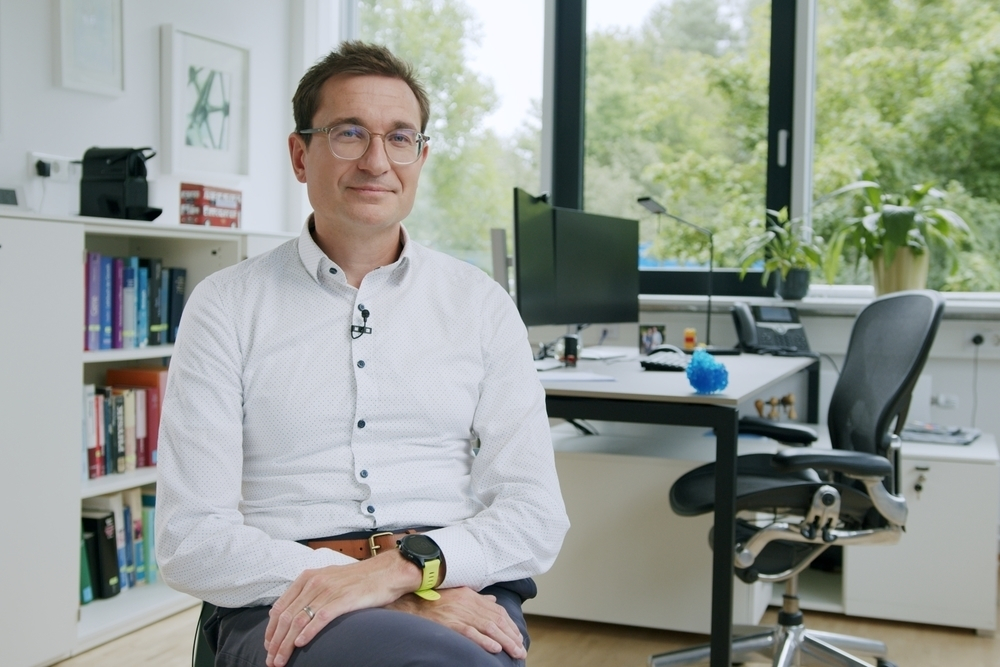
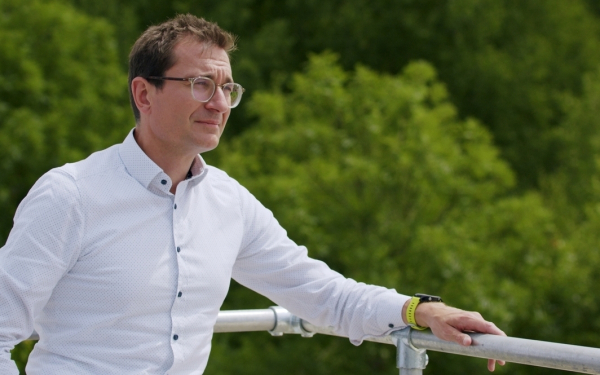
Tobias Erb is a researcher at the Max Planck Institute for Terrestrial Microbiology in Marburg. He received funding from the Volkswagen Foundation as part of the 'Life?' initiative.
How does one arrive at such a research question?
Tobias Erb: It's something that really preoccupies me. Of course, I have the climate problem and CO2 as a climate killer in the back of my mind. Above all, though, I want to know: how does the world work at its very core, on a microscopic scale? We talk about large global flows – CO2, photosynthesis, emissions. Ultimately, this is a vast carbon cycle, and microorganisms play a central role in it. They are remarkably good at this – perfected over billions of years of evolution. I'm interested in how this process came about, what the first microbes might have looked like, and how they evolved into what we see today. The surprising thing is that, after almost 100 years, we still don't fully understand exactly how a CO2 molecule is transformed through the molecular processes of photosynthesis. And the deeper we dig, the less we know.
All due respect to your curiosity, Mr Erb. But, Ms Hartmann, what does this mean for us as a society?
Henrike Hartmann: Curiosity is part of all of us. Scientists may have this trait particularly strongly, but curiosity is something deeply human and an end in itself. In Mr Erb's case, curiosity may eventually lead to better control of climate change or to new forms of energy generation.
[...] curiosity is something deeply human and an end in itself.
Are you often asked this question: What is the point of your research?
Tobias Erb: Yes, very often, and often in very specific terms – right down to questions about timeframes. Initially, we're just analysing how CO₂ fixation works in these molecules. But of course the next step follows on from that: how can we use this knowledge to develop new technologies or make existing processes more efficient? We've already developed an initial form of 'artificial photosynthesis' in our laboratory. But as soon as the question arises as to when this will be ready for use, I have to put the brakes on. It's a long road – as long as the one from the discovery of the DNA structure to the polymerase chain reaction, or from mRNA to the Covid vaccine. But a great deal emerges along the way: new knowledge, new technologies that find application in completely different fields. What's more: even if the paths are long, the vision is already having an impact.
What do you mean by that?
Tobias Erb: I work a lot with schools. That's where I realise how important positive visions are – especially for children and young people who sense just how much climate change will alter their lives. Showing them that science can provide solutions, and that they themselves can be part of that, motivates children and young people and encourages them to consider a career in science.
If Mr Erb is right that basic research and applied research cannot easily be separated – what conclusions do you draw from that?
Henrike Hartmann: I still think the distinction makes sense – even if, in practice, it is of course a continuum. You start with fundamental insights and move from there to application, to scaling up, to new products or societal solutions. But the starting point is different depending on whether I begin with an open-ended interest in knowledge or work towards a specific goal from the outset. Incidentally, this distinction also helps to counter the current hype that everything must be application-oriented straight away. Take number theory. For centuries, it was purely a mental exercise; no one thought of any practical use for it. Today, it forms the basis of modern encryption.
What does this mean for a research funder like the Volkswagen Foundation?
Henrike Hartmann: From a funding perspective, it's always about resource allocation: where do we invest, and how much? Strengthening knowledge transfer is important, no question about it. But if we rely solely on that, we'll dry up the pipeline, and in ten or 20 years' time, we'll run out of ideas. I like to compare this to the railways: if we neglect the infrastructure now, we'll be in a right mess later on.
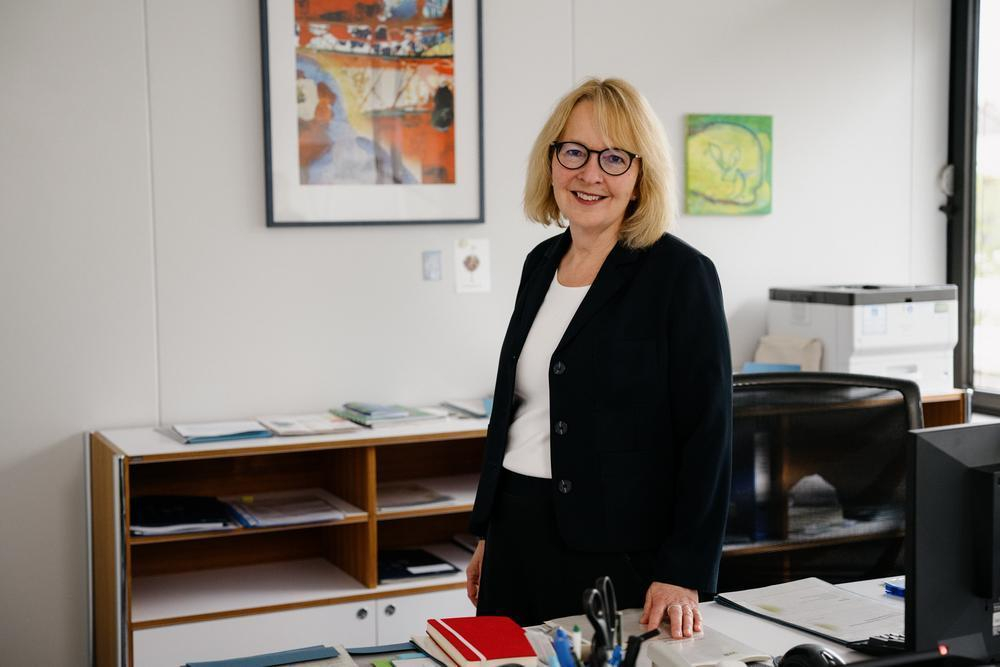
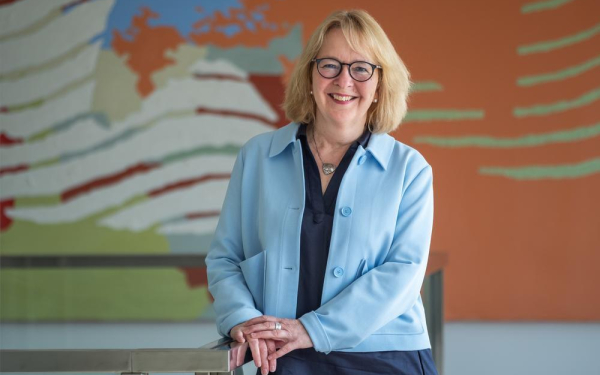
Dr Henrike Hartmann has been head of the Funding Division at the Volkswagen Foundation since 2015 and is a member of the Executive Board.
Is this a risk with the German government's 'High-Tech Agenda for Germany', which is concentrating billions on technology funding?
Henrike Hartmann: Politically, it makes sense to set priorities and drive forward certain key technologies – we need to keep up internationally. But the core funding for universities is weak. And when additional funds then flow primarily into certain fields, the academic community understandably gravitates towards where the money is to be found. This combination – weak core funding and a strong focus on third-party funding – is problematic.
Tobias Erb: The necessary support for innovation must not come at the expense of basic research. That is the crux of the matter for me. If pillars of basic research such as the German Research Foundation (DFG) or the European Research Council (ERC) were weakened in favour of short-term translation, then I would be genuinely concerned. After all, we need the freedom afforded by the DFG and the ERC for new ideas, interdisciplinarity, and even for disruption.
How do you strike a balance within your own funding framework?
Henrike Hartmann: As a foundation, we adopted a new strategy five or six years ago. A key area is major societal transformations, which naturally lean more towards application, often in collaboration with non-academic stakeholders. At the same time, through the 'Pioneer Projects' programme, we specifically fund the so-called 'unknown unknowns' – the exploration of the unknown unknown, where even the research question is often rather vaguely defined. This always involves a degree of risk.
In Germany, basic research is often confused with risk avoidance.
Tobias Erb: That is a very important point: pioneering work, risk. In Germany, basic research is often confused with risk avoidance. Many do not venture into the truly unknown, even though sufficient funding is available, including from the Volkswagen Foundation. People prefer to stick with what they know works. And this is precisely where one can also criticise state funding: that it is sometimes too conservative in its support.
Henrike Hartmann: That's absolutely right. However, we've noticed that, despite these opportunities, even here surprisingly few of the applications we receive are truly bold or contain new approaches. The ideas aren't flowing anymore. It's a symptom of the crisis we're in.
Tobias Erb: People have learnt to play by the rules dictated by the system.
Henrike Hartmann: That is why we need a close partnership between funders and the academic community: good ideas must first be put on the table – but then they must also be assessed in such a way that the very best, and indeed the most daring, projects are funded.
Tobias Erb: As researchers, when we make a discovery, we tend to delve ever deeper in the same direction – getting smaller and smaller, more and more focused. You end up with tunnel vision: from structure to simulation, from there into the subatomic realm – and at some point you lose sight of the bigger picture. Yet the scope for exploration is much wider; you have to consciously reclaim it, ask new questions, and think in an interdisciplinary way.
How do you do that in your work?
Tobias Erb: For me, it's the transition from microbial to synthetic biology: how do I use the knowledge gained about CO2 to radically rebuild photosynthesis – perhaps even in artificial cells? But to do that, you have to step out of your comfort zone. What's more, science is developing faster than you can keep up with. I'm no AI expert; I have to accept that young people are coming into our lab with skills and expertise that I no longer have a deep grasp of.
Henrike Hartmann: I find this point fascinating: when do people become complacent with what they have? This is precisely where our personalised support comes in, for example through the 'Momentum' programme. It is aimed at newly appointed academics in the early stages following their appointment. During this phase, many have focused intensely on excelling in a narrow field in order to meet the criteria for a permanent post. With 'Momentum', we deliberately want to strike a different note: funding to create the freedom to look in other directions and explore related fields. And we can see that it works. We receive a great many very good applications.
What would you like to see from research policy?
Tobias Erb: Firstly: a clear recognition that basic research is essential. For talent, for new ideas, for invention and innovation. We must not waver on this. On the contrary, we need to be more radical and invest more money in research processes, consciously accepting that much of it will fail.
Secondly: better ecosystems. Spaces where science comes together early on with companies, inventors and experienced practitioners – not with the aim of immediate transfer or patents, but to identify potential and harness it later.
Thirdly, the classic issue: bureaucracy and regulation. Of course, research security is important. But the effort involved in conducting globally networked research is growing ever greater. In research, we sense how the world is becoming more nationalistic and fragmented. These new silos worry me. For instance, when export controls mean that a colleague from Iran is no longer allowed to operate certain lasers here, or when entry for colleagues from China, the US or elsewhere is made increasingly difficult.
Do you have a personal list of basic research projects that – without setting out to do so – have changed the world?
Henrike Hartmann: Alongside mRNA and the COVID-19 vaccine, for me it's CRISPR/Cas – the 'genetic scissors' that allow us to specifically modify, or ideally repair, the genome. There are cases of newborns with severe genetic defects whose lives have been saved by these new approaches. Or graphene: in Manchester, there were the 'Friday Night Experiments', where researchers met up, played around a bit, stuck tape onto graphite, peeled it off again, over and over – and eventually ended up with the building blocks, graphene. With huge potential for applications ranging from screens to aviation. And then there are projects where we cannot yet say what they will lead to. For example, when the Max Planck Institute for Solar System Research searches for exoplanets with concentrated sulphuric acid in their atmospheres – because we now know that stable molecules, and thus life, are possible even under such conditions. That's exciting, isn't it?
Progress is not a single-generation project.
Tobias Erb: It is often the by-products. When researchers developed the exchange of Internet protocols in the 1980s, no one could have foreseen that this was the precursor to all modern video conferencing – a revolution in communication. A current example for me as a biologist is protein design. The fundamental question is: how does the 'alphabet of life', a linear amino acid sequence, become a three-dimensionally folded structure? I find it hugely impressive that we can now predict this so precisely using methods such as AlphaFold and, building on that, design proteins specifically, for example for therapies or new catalysts.
But we must never forget: even though we often pretend otherwise, these breakthroughs are in reality rarely the work of individual geniuses. They arise from long lines of development spanning decades and sometimes centuries. Lines of development based on theory, refinement, and ever-new groundwork. Disruption happens when everything comes together: new technologies, new perspectives, new people. Progress is not a single-generation project.