When Park Benches Bring People Together: Rethinking Encounters in Urban Spaces
Andrea Wong/VolkswagenStiftung
Design researcher Dr. Judith Dörrenbächer from the University of Siegen aims to explore how ‘smart’ technologies in public spaces can foster not only efficiency but also humanity – namely in the form of patient, impartial mediators between people.
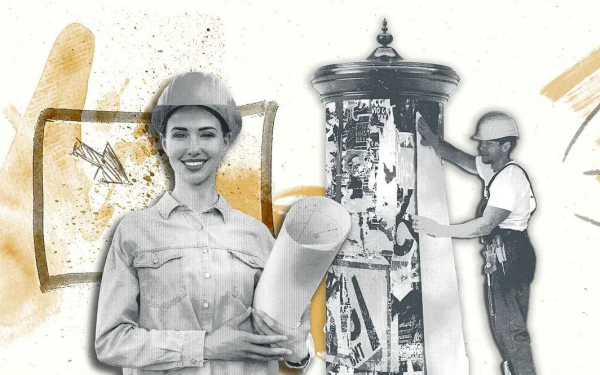
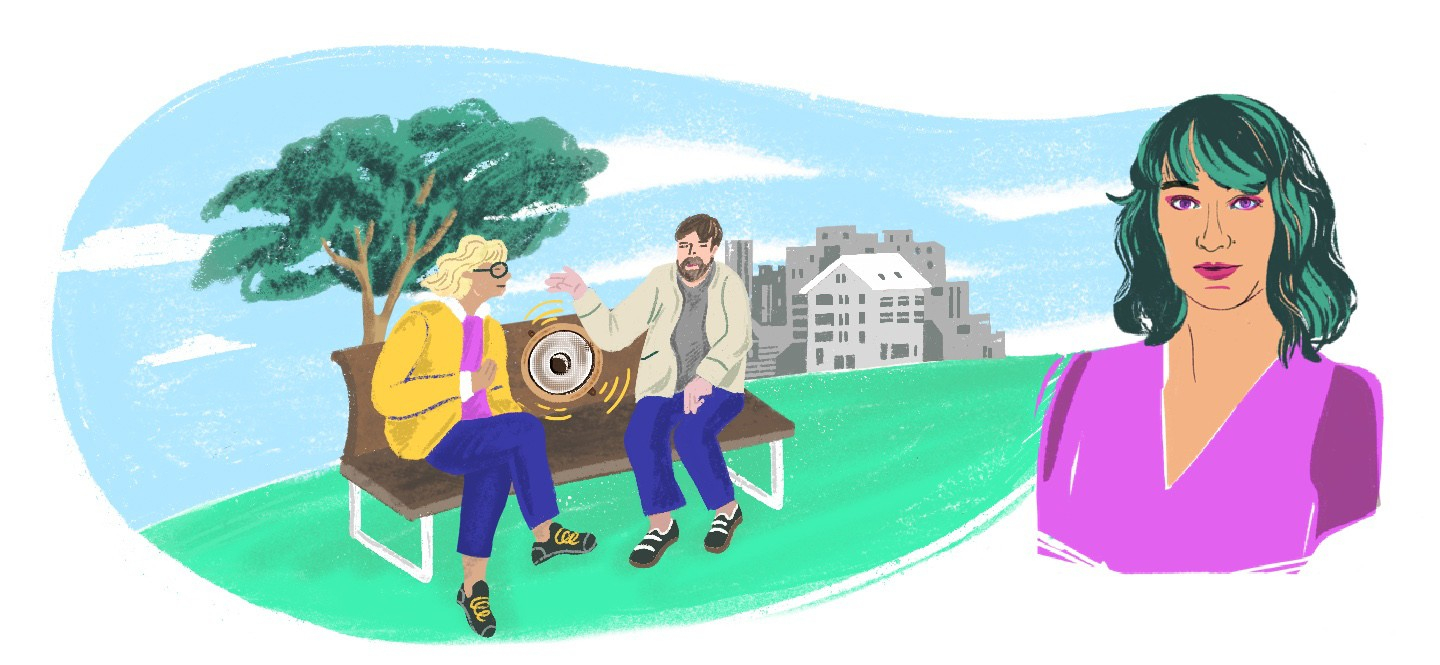
Would we engage with strangers more often if the city gave us a little help? For example, if a park bench sparked a conversation or an advertising column acted as a discreet intermediary?
We want to use technology to create small, positive moments of connection in people’s everyday lives
The title of Judith Dörrenbächers project, ENACT, stands for "Exploring New Assemblies of Communities & Smart Technologies in Urban Spaces". The aim of the project is to overcome social division by utilising urban spaces where different people meet by chance and face-to-face. “We want to use technology to create small, positive moments of connection in people’s everyday lives,” says Dörrenbächer.
Through her research, the academic is taking the laboratory out onto the streets and onto the stage: together with two PhD students from the University of Siegen and international artists, she is developing and exploring technological interventions in public spaces and on rehearsal stages. Together with her collaboration partner Alice Ferl from the Forum Freies Theater (FFT) Düsseldorf, she is setting up an artist-in-residence programme for this purpose. "There will be a total of 10 artistic projects at the theatre, each of which is closely interlinked with the two PhD projects at the University of Siegen," explains the researcher. "This is because we also aim to systematise theatre methods for technological development."
The aim is for members of the public to experience potential technologies and to engage in conversation about them with the researchers and with one another. What if a 'memory bench' collected people's meaningful experiences at this specific location and shared them with others? What if a robotic traffic light were to spark a conversation between me and another person waiting there? Could a piece of smart street furniture curate seemingly 'chance' encounters, thereby facilitating 'déjà vu' experiences between people?
"Such installations could create brief moments of connection," explains the researcher. "We want to make targeted use of technology's strengths to achieve this. For example, its infinite patience or the fact that it never holds a grudge – its robotic superpower, so to speak." What makes the ENACT project special is that it allows people to experience what it feels like when a machine fosters relationships – and where the risks lie. This provides Dörrenbächer with insights into how cities can deploy new technologies in a fair, inclusive and democratic way.

Dr. Judith Dörrenbächer
In addition, the researcher intends to bring together, in a panel of experts, not only specialists in robotics but also people from the fields of urban planning, architecture and politics. The aim is to produce concrete recommendations on how smart technology can facilitate interactions without being patronising.
The research for this article was supported by artificial intelligence.