Coasts Under Pressure – New Strategies for Coastal Protection
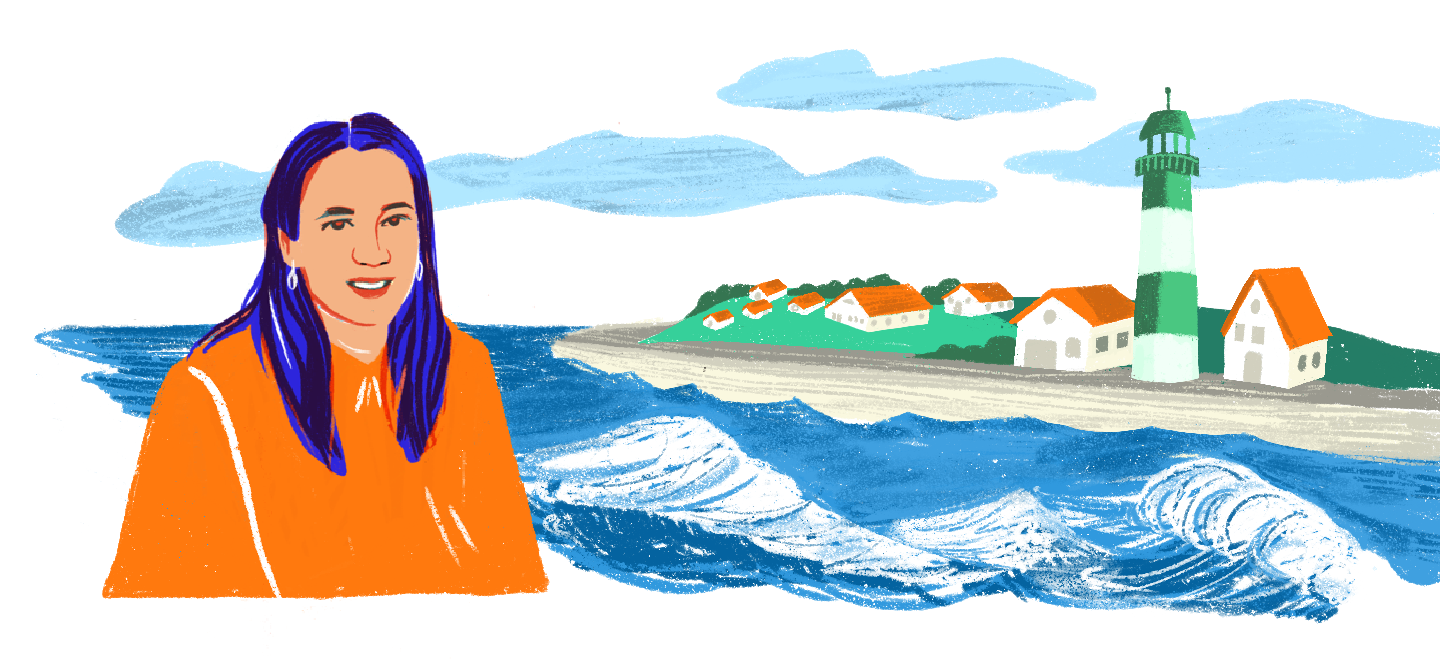
Andrea Wong für VolkswagenStiftung
Storm surges, rising sea levels, endangered coasts: as part of her Change! Fellowship, Dr Claudia Wolff from the University of Kiel is working with local stakeholders to find new ways of ensuring sustainable coastal protection on the Baltic Sea.
Many people along the Baltic Sea coast are unlikely to forget the night of 20 to 21 October 2023 anytime soon. A devastating storm surge caused extensive damage to ports, beaches and infrastructure. This is because buildings on the German and Danish Baltic Sea coast are often constructed right up to the water's edge – and in many places, such extreme water levels had not been seen for 150 years. The situation is different on the North Sea coast, where artificial dykes largely protect the inland areas from the more frequent storm surges.
But are dykes really the best strategy, or are there better solutions for coastal protection? Dr Claudia Wolff from the University of Kiel is investigating this in her project 'Recoast-Vision' (short for: Reimagining Coastal Flood Adaptation for Tomorrow's Baltic Sea Coast: Visionary Strategies for Transformative Coastal Adaptation). The Volkswagen Foundation is funding her as a 'Change! Fellow' with around 1.9 million euros over five years.
Wolff, a geographer and environmental manager, received her doctorate in 2021 on coastal hazards and sea level rise and has continued to research the topic since then. "I've always had a European perspective in my research. However, the coastal storm surge here on the Baltic Sea in 2023, right on our doorstep, made it clear that the precautions taken so far on the Baltic coast are not sufficient. I then teamed up with the Danish Coastal Authority and we discussed what new solutions could be. That's how the idea for the project came about," reports Wolff.
Together with stakeholders from four Baltic Sea regions, including the Schlei in Schleswig-Holstein, the researcher wants to develop possible visions for adaptation solutions in very different coastal systems. Wolff is relying on a ‘living lab’ to incorporate the knowledge of local actors, nature conservation associations and NGOs in an active participation process. However, she also wants to learn from mistakes made, for example, in North Sea coastal protection.
The project deals with new approaches that have not yet been implemented in the region – for example, changes in land use, barrages or withdrawal from endangered areas. The question of how such solutions can be developed for the future is also a central focus. Wolff explains: 'The idea, of course, is that we don't dictate this, but that we develop this vision together with the communities. And that we even make it tangible through virtual reality. We want to open up the discourse in such a way that creative, visionary ideas can emerge for implementation over the next 100 to 150 years.'