Creativity in Science: Martin Lercher on Night Science and Creative Research
Creativity is indispensable in scientific research: new hypotheses or research questions rarely arise from pure rationality. Working together with a fellow researcher, computational biologist Martin Lercher is exploring how research scientists can learn to be more creative.
Protecting Academic Freedom: Study Recommends Four Strategies to Counter Authoritarian Policies
An authoritarian government can put pressure on universities and research institutions – because the state provides them with funding and regulates their organisation. In a study commissioned by the Volkswagen Foundation, legal scholar Christoph Möllers has examined where the German research system is vulnerable to political influence and how it can be better protected.
Using data to make a bigger impact: How a Change! Fellow is helping NGOs to innovate
Many non-governmental organisations (NGOs for short), such as associations and foundations, are struggling with limited resources – and with the question of why good ideas often get stuck at the pilot project stage. Change! Fellow Prof. Dr. Orestis Papakyriakopoulos from the Technical University of Munich wants to change that.
When Park Benches Bring People Together: Rethinking Encounters in Urban Spaces
Design researcher Dr. Judith Dörrenbächer from the University of Siegen aims to explore how ‘smart’ technologies in public spaces can foster not only efficiency but also humanity – namely in the form of patient, impartial mediators between people.
The Volkswagen Foundation and the Hertie Foundation are Supporting German-Israeli Cooperation on Democracy Research
The Volkswagen Foundation and the Hertie Foundation are each providing 1.25 million euros in support of the newly established Max Planck Centre for Democracy, Security and Human Rights.
Research Into Democracies in Transition: 14.3 Million Euros for Eleven Transdisciplinary Projects
The Volkswagen Foundation is now supporting eleven new research projects on topics such as cyber violence, gender equality, Muslim family law and far-right interpretations of history, amongst others.
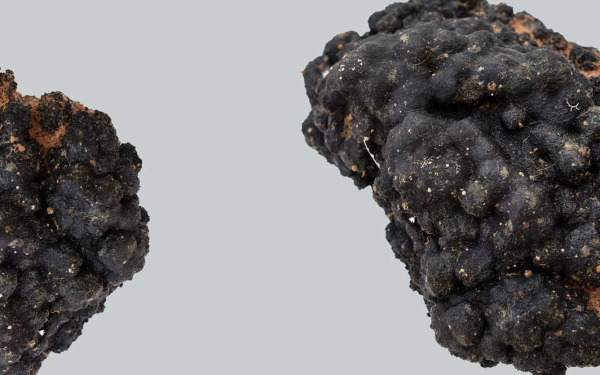
Manganese Nodules and Microorganisms: Life Fuelled by Radioactivity?
Radioactivity is generally considered harmful to life. Yet in manganese nodules in the deep sea, microorganisms might benefit from it. Or even live off it? This is the intriguing hypothesis that geoscientist Walter Geibert hopes to prove.
Climate Research Using Old Ship’s Logs: the Wind Leaves no Trace on the Sea
Did a volcanic eruption in 1783 shift the tropical rain belt? Old ship’s logs could provide the answer – and also shed light on the future climate for millions of people living around the equator.