Creativity in Science: Martin Lercher on Night Science and Creative Research
#Basic Research
Sebastian Mast/Connected Archives
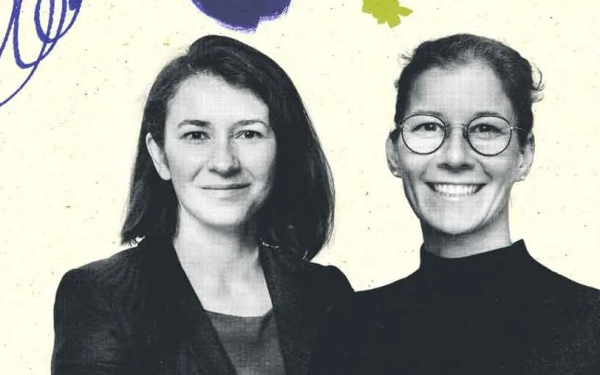
Creativity is indispensable in scientific research: new hypotheses or research questions rarely arise from pure rationality. Working together with a fellow researcher, computational biologist Martin Lercher is exploring how research scientists can learn to be more creative.
Mr Lercher, just how necessary is creativity in scientific research?
Martin Lercher: Creativity is the foundational engine of scientific breakthrough. If we researchers had no ideas to test, we would be unable to move forward. In my view, half of what science achieves can be traced to developing new ideas, and the other half comprises verification of that creative output.
You coined the term 'Night Science' for this – what does it mean?
My colleague Itai Yanai and I summarise our efforts regarding the creative scientific process under the term 'Night Science'. We borrowed the term from François Jacob, who viewed the scientific process as two-part and called the contrasting parts 'Day Science' and 'Night Science':
- Day Science is what we are all familiar with: for example, testing theories and hypotheses in the laboratory.
- Night Science, on the other hand, is the creative process. The metaphor is fitting, as the night is for dreaming, and thoughts are freer than during the day.
What can researchers do to become more creative?
Well, first of all they must become aware of the fact that such a creative process actually exists and that scientific progress hinges on imagination. And they should realise that they are able to learn tools for generating new ideas. Scientists are hardly ever formally taught creativity tools. There are various approaches that many researchers discover on their own over the course of their careers or pick up from a mentor.
But this is where we come in and start: scientists are also able to learn the tools for generating new ideas in a targeted way , and can be encouraged to take the freedom needed to do so. This is where the Volkswagen Foundation’s funding initiative comes in, which remains unique in the German funding landscape.
And, of course, researchers must be prepared to invest the time required for this. Many of us find this the most difficult part.
Can you give an example of a creative tool?
The simplest and possibly most important is to share one’s thoughts with another person in order to develop ideas together – with a positive attitude and an open mindset. People in general, and researchersscientists in particular, have a tendency to first think about why something might not work, or what could be wrong with a new idea. We must learn to set that aside if we want to develop something new. We need to be positive to help ideas develop; that is extremely important – and it is something you can practise.
In order to develop ideas together we need to have a positive attitude and an open mindset.
You cannot summon creativity at the snap of a finger. How can researchers best approach it?
The creative process consists of several phases: in an initial phase, you first have to gather information and clarify the problem that needs solving. Typically, you don’t solve it straight away. There is a sort of incubation phase during which the subconscious has the opportunity to work on it. Ideas for the solution then often come later and quite suddenly, when you least expect them.
What sort of situations do you mean?
It depends on the person: in the podcast, one researcher said he almost always gets his best ideas when he gets off the bus. Another reported having flashes of inspiration whilst folding socks. It varies greatly, but typically the best ideas come when your mind is free and you’re doing something that has nothing to do with the actual problem at hand.
Where and how can you learn creative techniques?
In our Night Science podcast, Itai Yanai and I talk to guests about the tools they use for their scientific creativity. This can be a valuable source of inspiration, especially for younger researchers.
And at the Night Science Institute, our non-profit institute in New York, we have developed a series of workshops. Participants learn about the dichotomy of the scientific process: the creative as well as the testing parts. We then explain a number of tools and try them out together.
Typically, the best ideas come when you're doing something that has nothing to do with the actual problem.
Why did you set up the Night Science Institute?
We are initially focusing on postgraduate training, i.e. PhD students. Ideally, this should begin during undergraduate studies or even at school, but we are still a long way from that.
However, a start has been made: for example, you are reaching me in New York right now, where our Train-the-Trainer workshop series begins at the New York Academy of Sciences at the end of April. On 30 September, we will also be offering this in Germany, at the EMBL Institute in Heidelberg. Researchers from all disciplines can apply via our website night-science.org.