Protecting democracy: ways to engage in constructive debate
#Democracy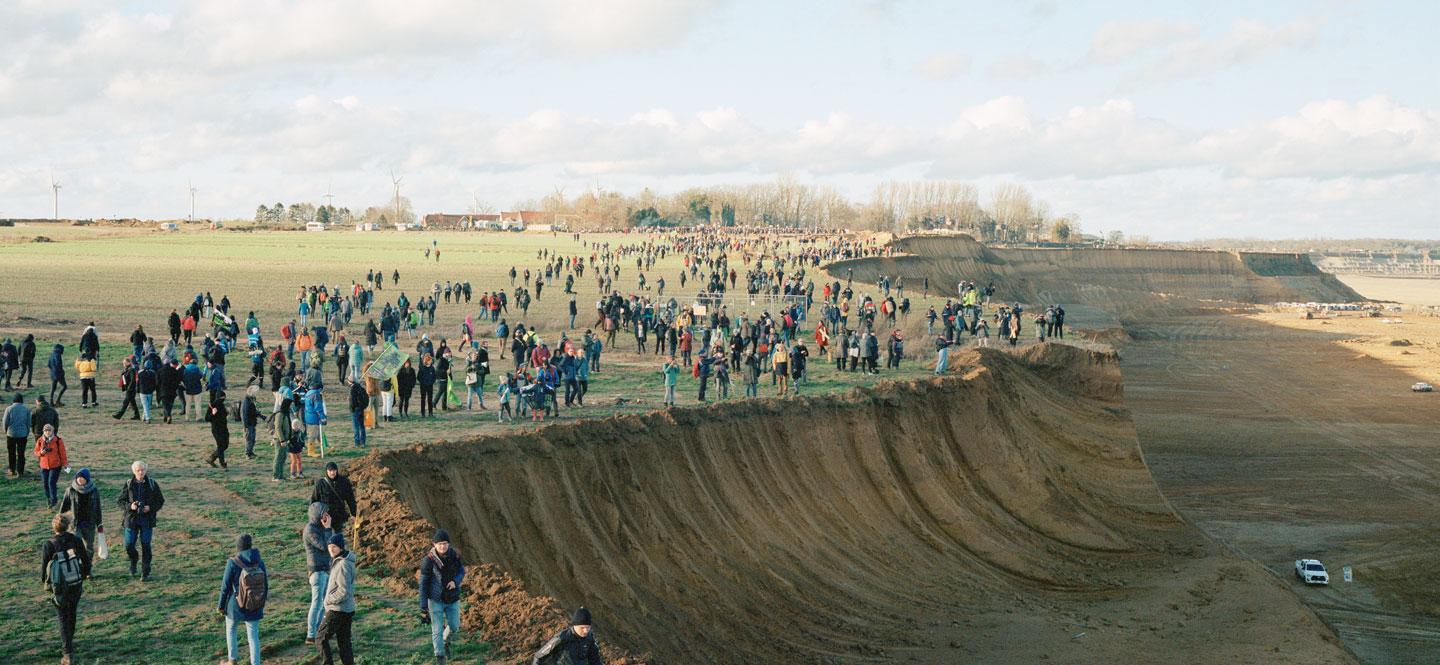
Daniel Chatard / laif
Conflicts are often so deadlocked that constructive dialogue between the opposing sides is no longer possible. Instead, social media is used to fuel stereotypes and fake news. This breakdown in communication threatens democracy. The "Testimonial Lab" project explores new forms of communication that can restore dialogue.
Climate change, the coronavirus, gender issues, or the battle over the Hambach Forest in the Rhineland coalfield – these are topics that divide opinion and are perfect for debate. Debate is not, in fact, a bad thing: It is good for a democracy and keeps it alive through a diversity of views.
[...] we are increasingly encountering situations where people refuse to communicate or cut off communication.
Regular users of social media platforms such as Instagram, Facebook, X and the like know, however, that those who engage in heated exchanges on political or social issues there are rarely interested in constructive debate. There is a lot of hate and online abuse, along the lines of: ‘You disagree with me? Then you’re my enemy – and I don’t care why you think the way you do.’ It seems to be mainly about who comes out on top, rather than listening to one another and truly engaging with the other person. Scepticism towards democratic processes is growing.
This is dangerous because: “This kind of heated dispute can undermine the very foundations of communication, with the result that we are increasingly faced with a refusal to communicate and a breakdown in communication,” says Hans-Jörg Sigwart, Professor of Political Science at the Rheinisch-Westfälische Technische Hochschule (RWTH) Aachen. "A long-term consequence is that the willingness to engage in direct debate dwindles and a fundamental scepticism towards democratic processes emerges."
Sigwart and his research colleague Michel Dormal, also a professor of political science in Aachen, are therefore preoccupied with the question: can different camps manage to listen to one another despite conflicting views and entrenched positions? And how can this be achieved? In their transdisciplinary project "Testimonial Lab – Exploring modes of articulation in deep societal conflict", which began in autumn 2024, Sigwart and Dormal are exploring new forms of communication in the form of a real-world laboratory, together with sociologists Roger Häußling and Tabea Bongert, as well as non-academic partners.
Special workshops – known as Testimonial Labs – are designed to help defuse conflict situations between opposing parties and enable each of them to formulate personal messages that are important to them. “This creates space for their differing experiences. Both sides should first focus on how they themselves experience the situation – and they should feel that this message is actually being heard,” explains Dormal. This can then foster a willingness to engage seriously with the concerns of the “other side”.
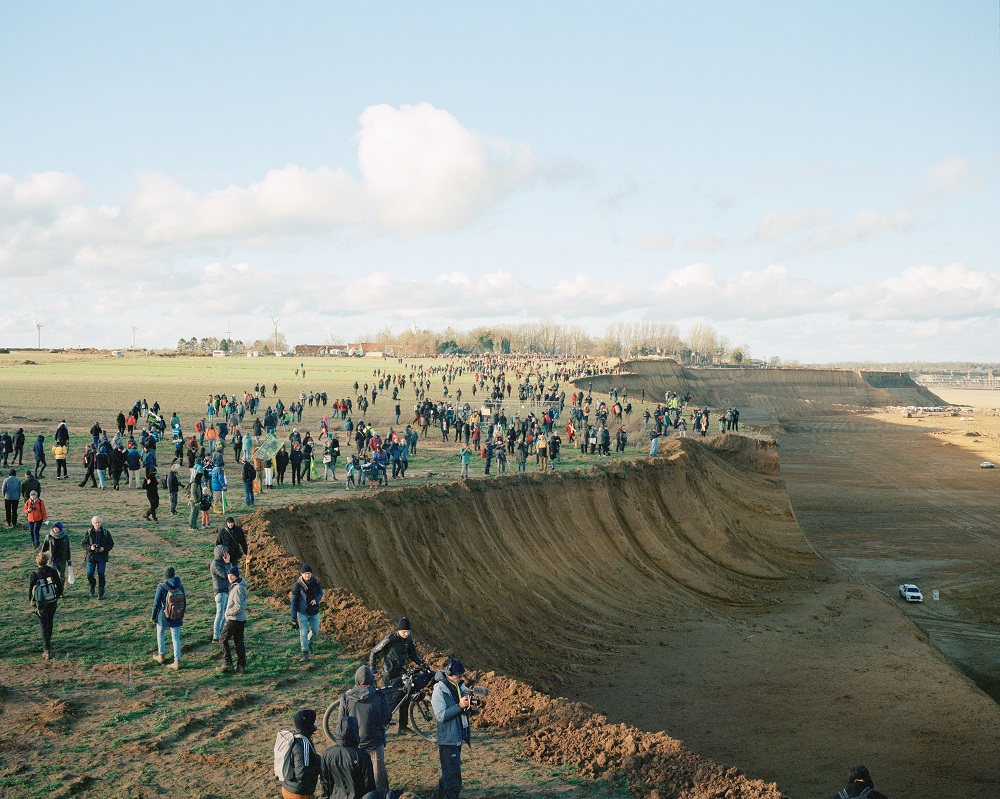
Since 2017, Daniel Chatard (laif) has been documenting the conflict over coal mining in North Rhine-Westphalia as part of his project “Niemandsland”. For many years, the police and protesters calling for an end to mining stood in irreconcilable opposition to one another.
Channelling non-communication into constructive dialogue
To this end, the groups meet separately and, based on these workshops, draft messages for the other side. "The idea is to transform the situation of non-communication into a format in which this non-communication can nevertheless have a constructive effect," says Sigwart.
This principle seems to be working well – something that is already evident even before the project has come to an end. "Testimonial Lab" is one of the task force projects supported by the Volkswagen Foundation through its initiative "Transformational Knowledge on Democracies in Transition". All of these projects bring together the academic knowledge of researchers and the practical expertise of civil society actors. The initiative focuses on questions such as: “How can we protect our liberal democratic structures? And what impact does civil society engagement have on the transformation of society?”
Example: The conflict over the Hambach Forest
For "Testimonial Lab", the research team at RWTH Aachen University chose the long-running conflict over open-cast coal mining in the Rhineland as a case study: climate activists and energy workers – employees of RWE Power – find themselves on opposing sides. Some have been fighting for many years against the clearing and for the preservation of the Hambach Forest, some living in tree houses on site and thus taking a firm stand against the lignite industry and its employees. Although a court ruling in 2018 finally halted the deforestation of the large forest area in the Rhein-Erft district, However, the climate and nature conservationists remain on high alert and continue to occupy the forest to this day.
However, the conflict was not, and is not, solely about the Hambach Forest. Rather, the disputes in 2022/23 continued, amongst other things, with the occupation and clearance of the village of Lützerath near the Garzweiler opencast mine. The other side, the workers, on the other hand, are driven by the fear that the social relevance of their work is not recognised and that real practical problems are often misrepresented. Direct dialogue would not have been possible at the outset due to this difficult starting point.
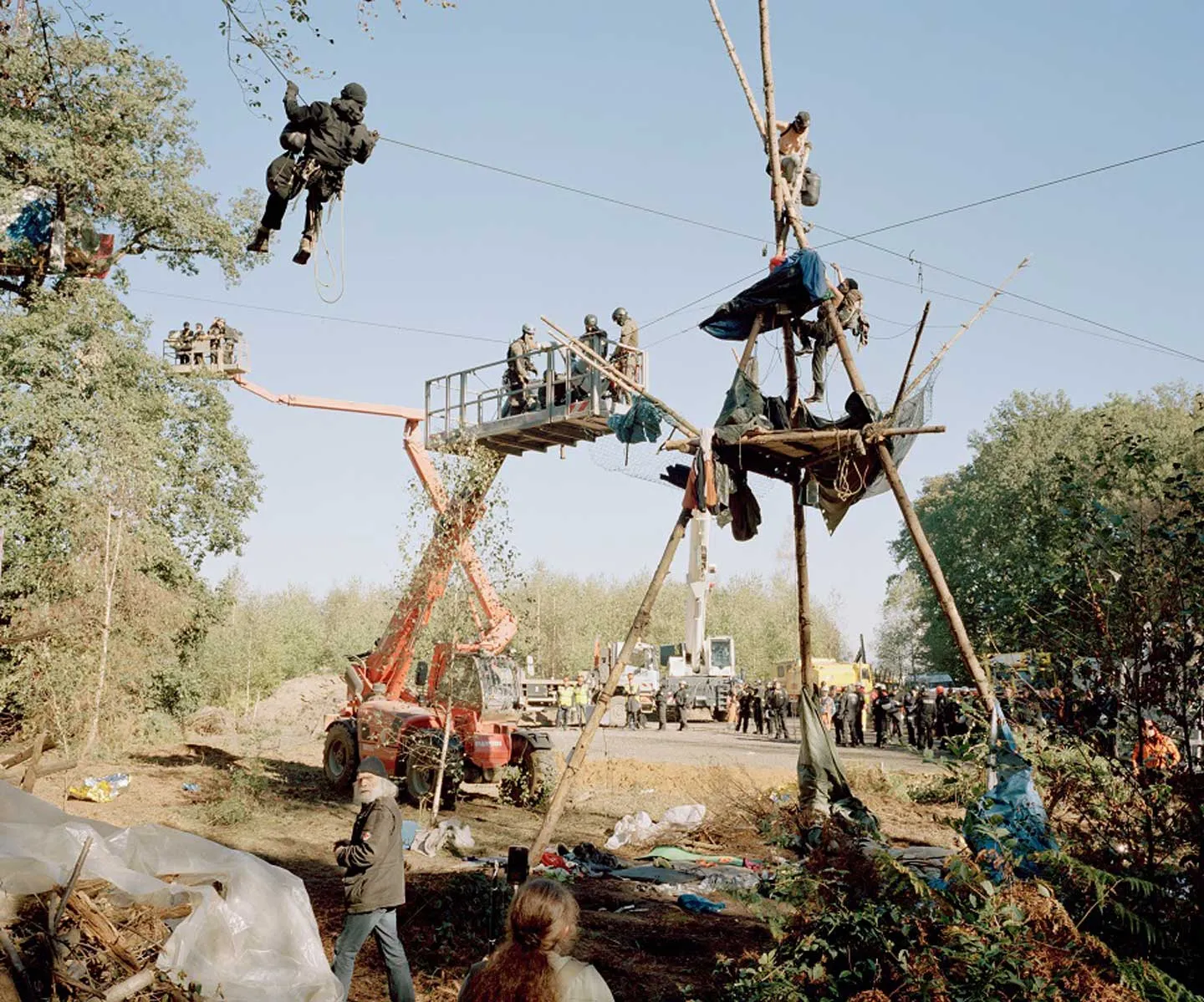
Photograph by Daniel Chatard: To expand the open-cast mine, forests were cleared and entire villages were destroyed and relocated.
From the researchers’ perspective, the problem is “that established political institutions are failing to resolve conflicts such as the one over the Hambach Forest, and both sides feel that their experiences and grievances are not being adequately acknowledged or articulated”.
Messages to the other side
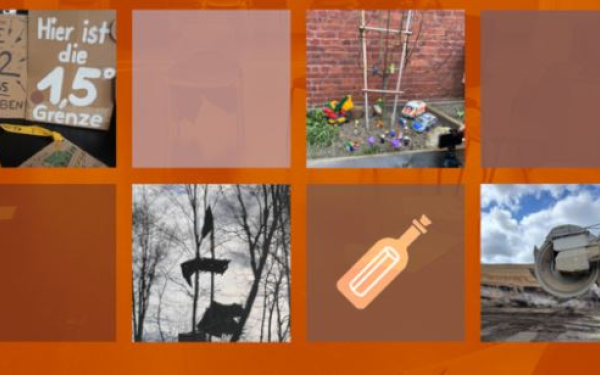
The workshops, which took place between January and April 2025, addressed this issue through their unique format of separate groups. The messages to the other group included questions such as: What concerns us? How have we perceived the dispute over the Hambach Forest so far? How do we experience the confrontation with you climate activists and you RWE employees? How do we envisage the future of our region? They were free to choose the format – whether text, image, audio recording or video.
Traditional participatory formats [...] are reaching their limits.
The other side then had to engage with the content of this "message in a bottle", as Sigwart and Dormal call it. Existing forms of public participation are less suitable here, say both researchers: "Conventional participatory formats such as citizens’ assemblies or mini-publics reach their limits, as they already require a minimum level of communication and exchange. However, this is usually not the case in entrenched conflicts." The project involves the following non-university partners: the Regional Resilience Association, the MörgensLab at Theater Aachen and the German Trade Union Federation in Aachen.
"The association provides a network for a whole range of civil society groups and organisations, and was helpful, for example, when it came to recruiting climate activists to take part in our project. Many of them were actually quite sceptical about our initiative at first," explains Michel Dormal.
Re-enacting experiences with Playmobil figures
The trade unions and the RWE works council helped to select the energy workers. The theatre professionals at MörgensLab, for their part, took charge of the creative framework for the workshops and helped to shape their content. MörgensLab brings together scientists and theatre professionals with Aachen residents for artistic workshops and science slams, and was therefore the ideal partner for the project.
In the "Testimonial Lab", participants were able to express their personal experiences and expectations through role-play or using Playmobil figures, amongst other activities. This was well received by most. Michel Dormal and Tabea Bongert observed and documented the workshops.
"Both RWE employees and climate activists are, as groups, quite diverse," explains Dormal. "Many RWE employees consider environmental and climate protection to be very important, but disagree with the way the activists seek to push through their goals, which they perceive as radical. Others believe that preserving jobs in the region is more important than climate protection." The activists, on the other hand, are united by the goal of protecting the environment and the climate, "but they come from different protest movements – from Fridays for Future to the anti-nuclear movement of the 1980s – and thus also from different generations".
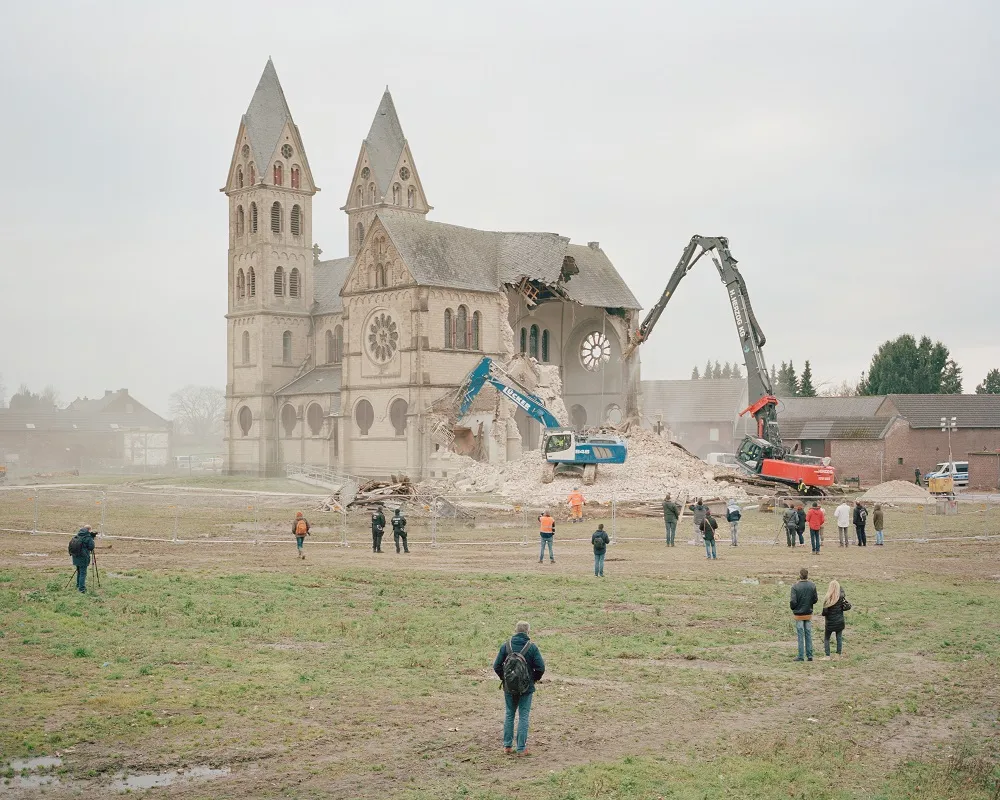
Photograph by Daniel Chatard: This church had to make way for the expansion of the opencast mine.
[We want to find out] how [...] the conditions for constructive public debate can be restored.
This diversity also led to some lively discussions within the two groups. “The overarching aim of our empirical research is to find out how this indirect communication format can help establish reciprocity and thus restore the conditions for constructive public discourse – beyond the confines of parliaments and political parties,” says Hans-Jörg Sigwart. A face-to-face meeting From the perspective of the “Testimonial Lab” team, this has already been a success. Indeed, after just the third workshop, both the activists and the RWE employees expressed a desire to meet in person to exchange views. “This is a welcome development and wasn’t actually planned as part of the project,” says Hans-Jörg Sigwart. “It was clear to us that, in the end, there probably wouldn’t be much fraternisation between the two groups. We’re already satisfied if we can help overcome the silence to some extent.” Together with his colleagues, he will also facilitate the requested face-to-face meeting and is keen to see how it will unfold. His colleague Dormal adds: "It’s a great success that two groups have come together who are not only willing to invest effort in crafting a sincere message, but who now also want to listen to what the other side has to say during a face-to-face meeting." Neither of the researchers, they say, had expected this to happen so quickly within the team. This gives hope that the "Testimonial Lab" could also prove useful in other social and political conflicts.