Exploring New Research Spaces: Five Years of 'Open Up' in the Humanities and Cultural Studies
#Impact
Through its funding initiative 'Open Up – New Research Spaces for the Humanities and Cultural Studies', the Volkswagen Foundation has supported a total of 57 project teams since 2021. Even after the funding programme has come to an end, the funded projects continue to have an impact, as does the 'Distributed Peer Review' process, which was successfully trialled as part of the initiative.
'Open up' was aimed at project teams comprising two or three researchers from the humanities, cultural studies and certain areas of the social sciences. Funding was provided for high-risk projects with an open-ended outcome – explicitly including the possibility of failure.
The 'Open up' initiative has demonstrated how important open-ended, exploratory funding is for the humanities and cultural studies.
A wide range of disciplines and unconventional perspectives
The funded projects reflect the full breadth of the humanities and cultural studies, ranging from philosophy and theology through history and literature to media studies, sociology and political science. The recipients include both established professors and postdoctoral researchers at the early stages of their careers.
We present some of the projects below. They serve as examples of just how varied the research questions and methods pursued within the 'Open up' programme could be – ranging from artistic and experimental research to global migration studies and digital methods of text analysis.
'Open up' has given us the freedom to explore an innovative and exciting interdisciplinary field of research.
AI in musical dialogue
"The exploratory format gave us permission to follow unexpected outcomes, then redesign methods around what actually happened."
Örjan De Manzano
Artificial intelligence is increasingly transforming the world of music. Örjan De Manzano (Max-Planck-Institut for empirical Aesthetics) and Ben-Tal (Kingston University) investigate how human and machine creativity intertwine in real-time collaborative music-making. Using state-of-the-art analytical methods, they investigate the cognitive dynamics of improvisation and how interactive AI systems can support—rather than replace—human creativity. Bridging artistic practice with empirical research, the project brings together music, technology, and cognitive science to generate new insights into joint action, co-creativity, and the conditions that facilitate musical creativity.“
Find out more about the research project in our project database: Creative Musical Dialogues between Human and Machine: a Novel Approach to Studying Improvisation and Joint Action
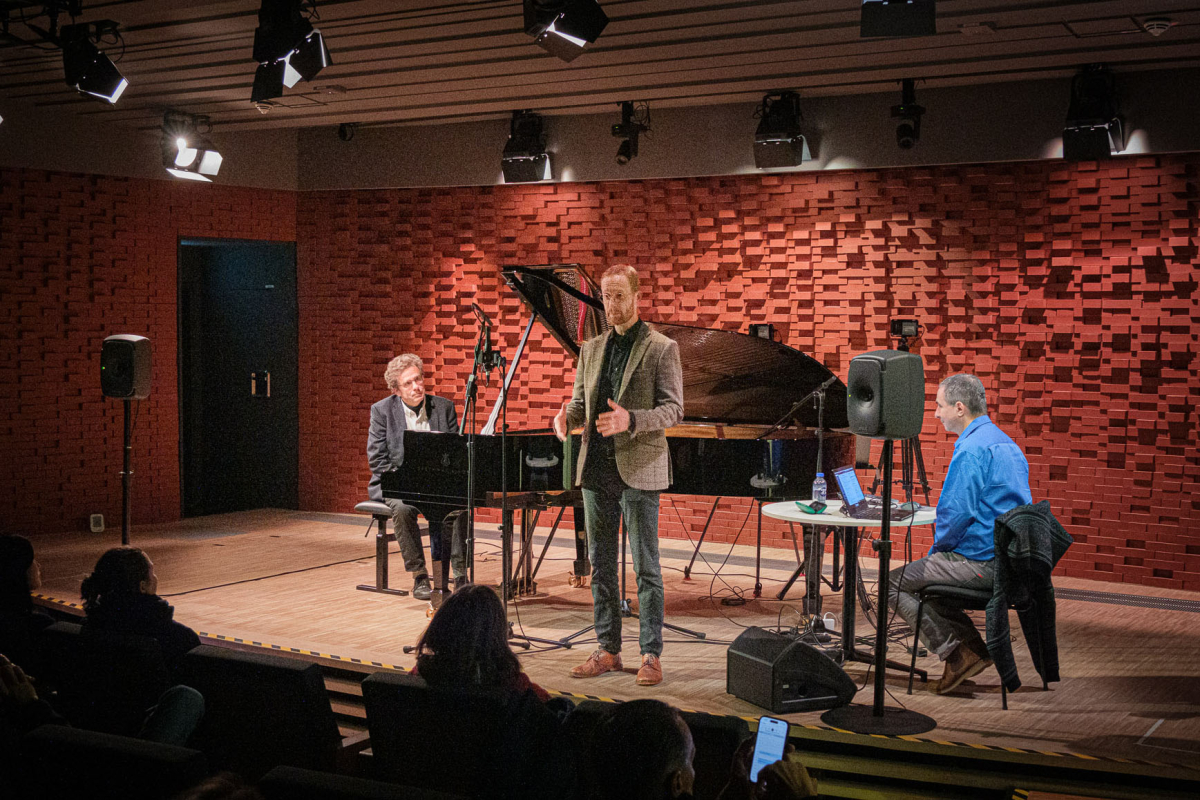
Public concert featuring ‘Man and Machine’ from the project at the MPIEAin 2024, with Professor David Dolan, Örjan De Manzano and Oded Ben-Tal (from left to right). Photo: Felix Bernoully
Rethinking maritime migration
"‘Open up’ enabled us to initiate a wide-ranging and in-depth exchange of ideas on the militarisation and politicisation of the sea in relation to refugees."
Gerhard Hoffstaedter
Refugees fleeing by sea often risk their lives – yet refugee studies have so far focused primarily on land-based refugee movements. Antje Missbach and Gerhard Hoffstaedter therefore aim to initiate a 'maritime turn' with their project at Bielefeld University, bringing refugee routes and experiences at sea more firmly into the focus of research. In an interdisciplinary and transnational Maritime Refugee Laboratory, researchers are investigating how deterrence policies, refusal to rescue or landing bans increase risks and prolong escape routes. The aim is to develop new perspectives on global migration and to highlight the specific challenges of maritime refugee movements.
Find out more about the research project in our project database: Theorising (im)mobilities at sea: Challenging the terra firma bias in Refugee Studies through human maritime movements
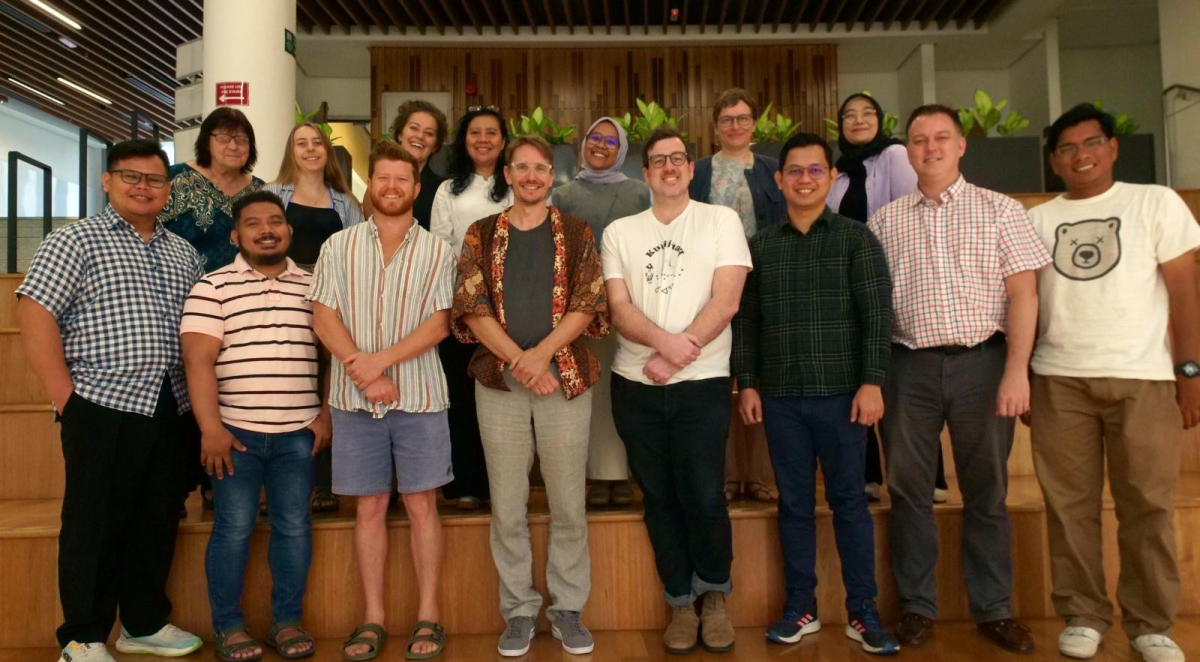
Antje Missbach (second row, second from the right) and Gerhard Hoffstaedter (front row, fifth from the right) with participants in a writing workshop for the Maritime Refugee Lab in Kuala Lumpur, Malaysia
How linguistic creativity arises
"'Open up' has given us the freedom to explore an innovative and exciting interdisciplinary field of research."
Thomas Hoffmann
Thomas Hoffmann and Marco Steinhauser from the University of Eichstätt are investigating how creative language use arises – in other words, how people express new ideas in original ways through language. To this end, an interdisciplinary team combining linguistics and neurocognitive research is developing the first predictive neurocognitive model of creative language use, thereby opening up new perspectives on the interplay between language, thought and the brain.
Find out more about the research project in our project database: Predictive Construction Grammar - Developing a neurocognitive model of linguistic creativity
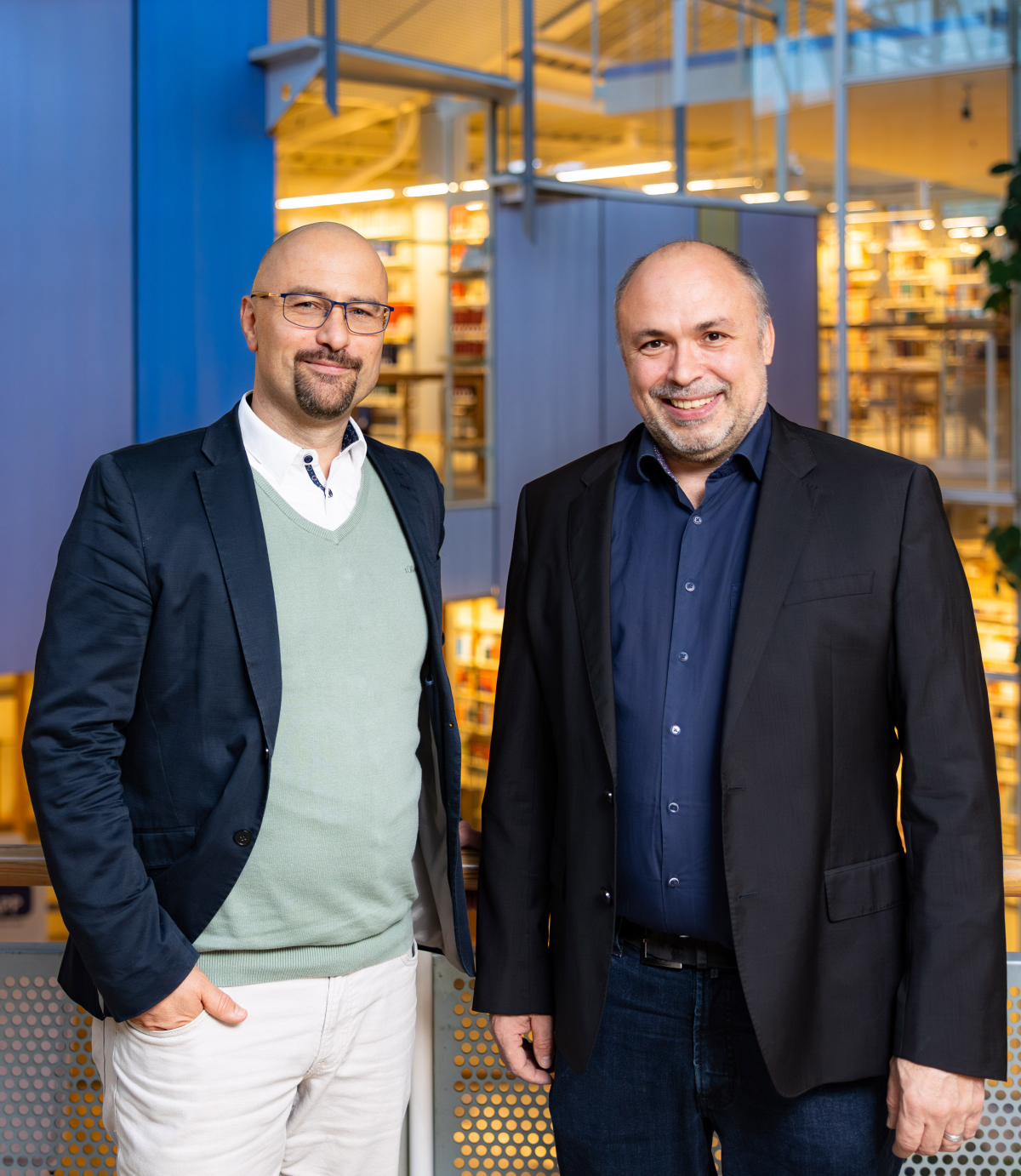
Thomas Hoffmann and Marco Steinhauser
Legends and ecological beliefs
‘We are probably one of the first literary research projects where hiking boots have been part of the research kit. When you leave your desk and set out to explore the stories and legendary figures in the countryside, you can make some amazing discoveries.’
Joana van de Löcht
In the 'Ecofolk' project, Joana van de Löcht (University of Münster) and Niels Penke (Siegen University) are examining legends and fairy tales from the Harz Mountains, the Black Forest and Bohemia with a view to their ecological and cultural-poetic potential. The focus is on (super)natural figures such as dwarves and water spirits, which shape traditional conceptions of the relationship between humans and nature – a relationship that has undergone fundamental changes over the past 400 years. At the same time, the project examines contemporary interpretations of these legends, ranging from regional nature marketing to festival cultures such as Walpurgis Night or Fasnacht.
Find out more about the research project in our project database:
Ecofolk. On the agency of (super-)natural entities of German low mountain ranges
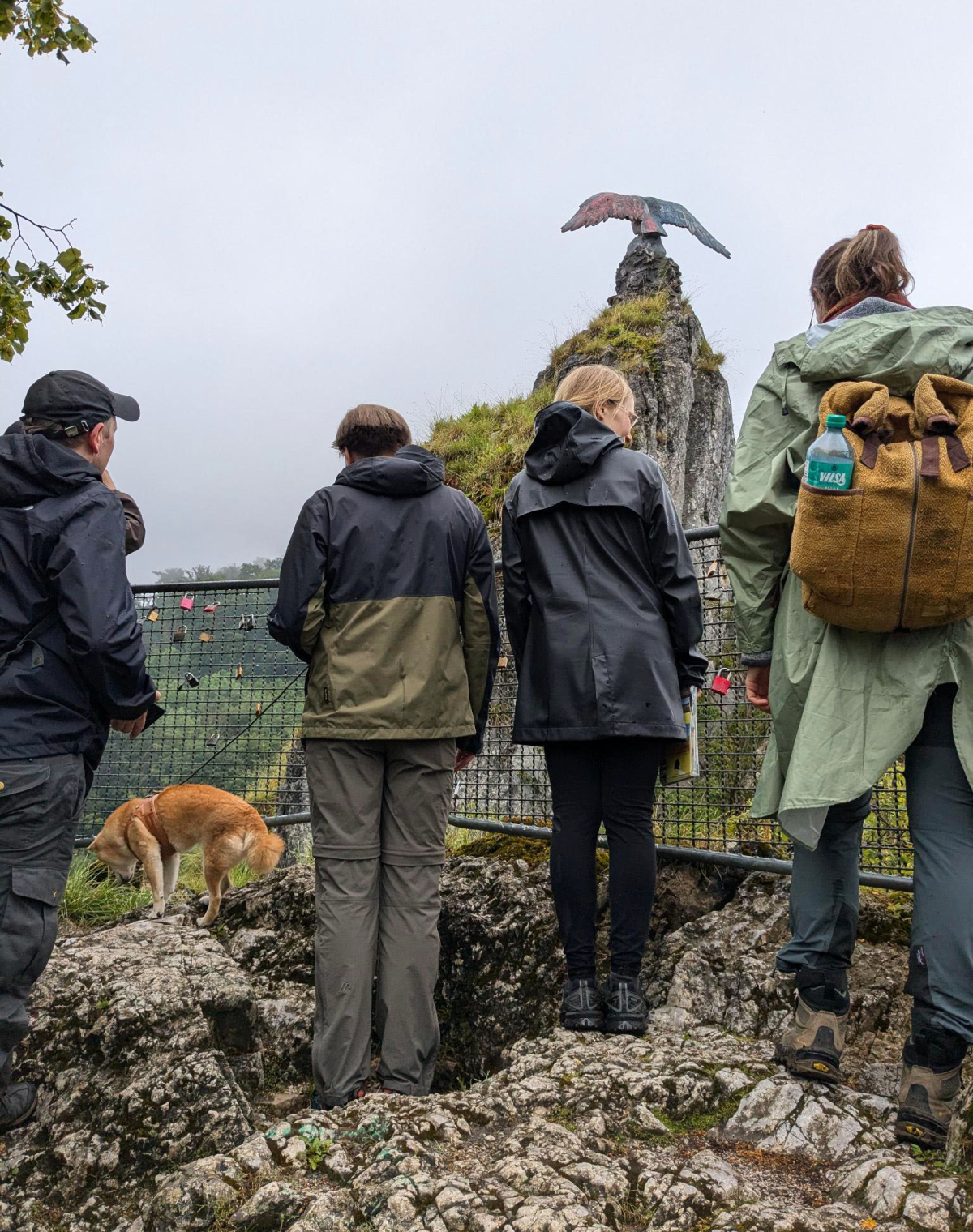
Research walk on the Hübichenstein
Digitally deciphering historical stenography
"For us, this was a unique opportunity to establish fundamental research and lay the groundwork for the computer-assisted decipherment of all forms of stenography."
Tino Licht
Tino Licht (University of Heidelberg), Vincent Christlein (University of Erlangen-Nuremberg) and Nikolaus Weichselbaumer (University of Mainz) aim to decipher the hitherto little-studied ‘Vergilius Turonensis’, a 9th-century manuscript containing commentaries written in ancient stenography. To this end, the team is developing a digital tool for the “guided decipherment” of historical shorthand systems, thereby creating new avenues of access to difficult-to-read textual sources. By combining Medieval Latin, book science and pattern recognition, the project is carrying out pioneering work at the interface between the humanities and digital technology.
Find out more about the research project in our project database:
Stenographie in historischen Dokumenten. Entwicklung eines Kurzschrifttools auf Grundlage der Dechiffrierung eines Vergilkommentars in tironischen Noten
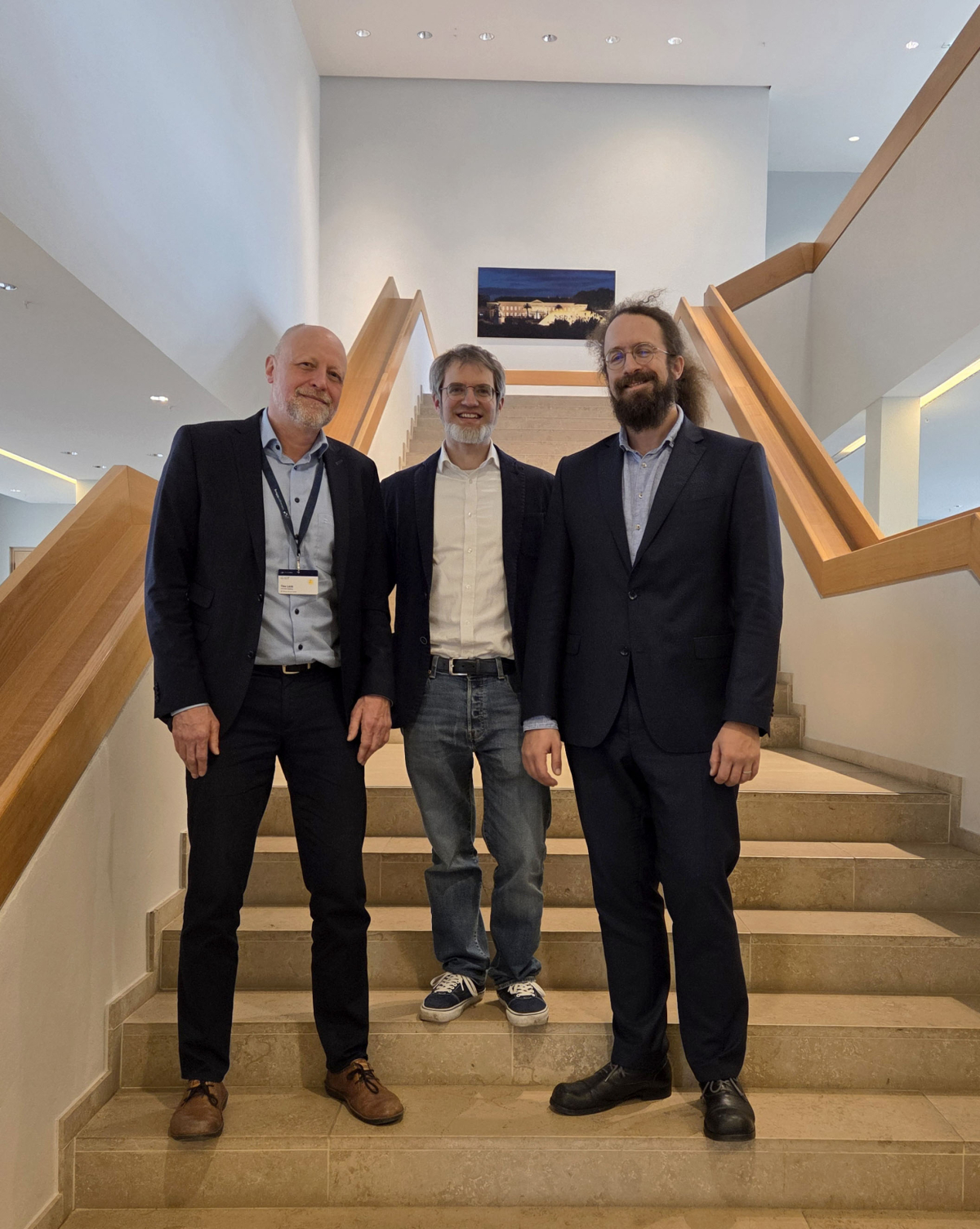
Tino Licht, Vincent Christlein and Nikolaus Weichselbaumer at the "Open up" forum in March 2026 (from left)
Climate, Migration and Operational Platforms
‘The open-ended funding fostered an open-minded approach to thinking and action – and led to a collaborative working process that would not have emerged on its own.’
Svea Bräunert
The 'Border Values' project by Winfried Gerling, Paul Heinicker and Svea Bräunert at the Potsdam University of Applied Sciences analyses the European platform CALLISTO, which links data from satellites, drones and social media using AI. Using an interdisciplinary approach combining media studies, design and artistic research, the team is investigating how climate and migration policies are operationally intertwined through data-driven technologies.
Find out more about the research project in our project database:
Border Values: Operational Relationships of Climate and Migration
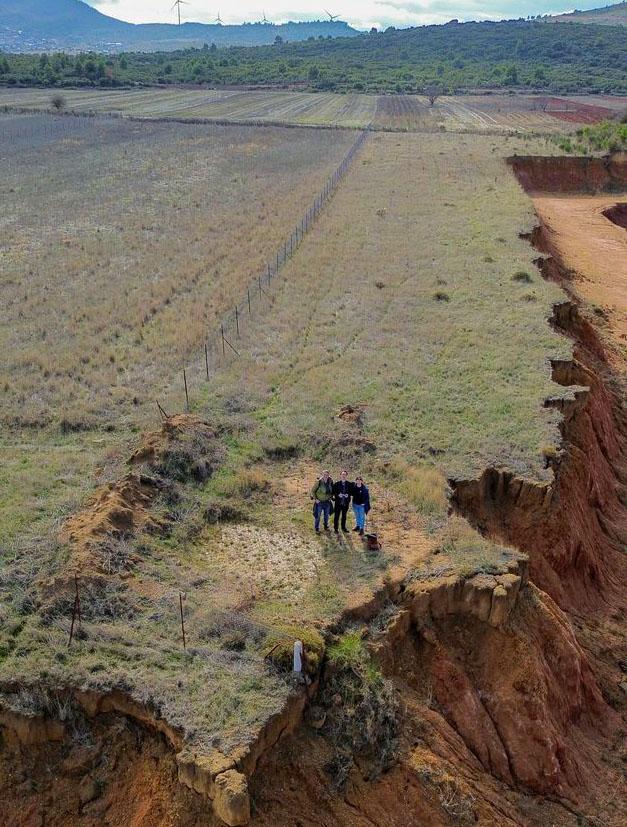
Svea Bräunert, Winfried Gerling and Paul Heinicker conducting field research on a virtual border in Boeotia, Greece, December 2024.
New Approaches to the Evaluation Process: Distributed Peer Review
The Foundation is constantly testing new methods in its funding practices. As part of the 'Open up' initiative, innovative approaches to the evaluation process were tested. For the first time, alongside the traditional panel review, project selection was also carried out using the Distributed Peer Review (DPR) process, in which applicants evaluate each other’s proposals.
To gain further insights, the Foundation will also use DPR in other funding initiatives in future, currently for example in the “Pioneering Projects – Explorations of the Unknown Unknown” funding initiative. More information on the DPR process and the Foundation’s experiences to date can be found under “Assessment via Distributed Peer Review”.

Prospects for future funding schemes
After four rounds of calls for proposals, the 'Open up' initiative has come to an end. However, the continued high level of interest in the initiative shows that there is still a need for such funding formats. Pierre Schwidlinski, the funding officer responsible for the initiative, emphasises: "'Aufbruch' has demonstrated how important open-ended, exploratory funding is for the humanities and cultural studies. At the same time, it became clear that the framework conditions are no longer optimal: many projects require longer durations and follow-up opportunities so that new research areas can generate sustainable momentum."
The Volkswagen Foundation has therefore launched a process for the strategic further development of its funding in the humanities and cultural studies. In discussions with international experts and at a major event in late summer 2026, the future roles and functions of the humanities and cultural studies in academia and society will be discussed.
On this basis, the Foundation is developing a new funding programme designed to better reflect current needs – whilst retaining the bold, pioneering character that defined 'Open up'.