
"We Want to Boost Good Working Conditions in Academia"

VolkswagenStiftung
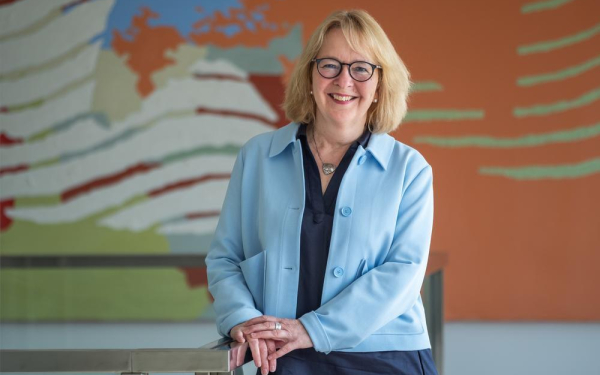
The Volkswagen Foundation is taking a key step towards improving working conditions in academia: in future, full-time positions for PhD candidates are set to become the norm in Germany. In this interview, Henrike Hartmann, Head of the Business Unit Funding, explains the new policy.
Ms Hartmann, from April onwards there will be a new requirement regarding the scope of PhD positions in proposed projects. What exactly will change?
Henrike Hartmann: In future, applications for PhD positions at German institutions can only be submitted to us for a 100 per cent workload; accordingly, only full-time positions can be approved.
What prompted the Volkswagen Foundation to adjust its rules on funding PhD positions?
We wish to contribute to the further development and improvement of the research system in Germany. Working conditions and staffing structures naturally play a key role in this. We intend to make the most of the flexibility afforded to us as a private foundation: on the one hand, we ensure better working conditions in the projects we fund, and at the same time we provide impetus to the German research system, which we hope will also be taken up by other stakeholders.
Our Board of Trustees decided to take this step in the summer of 2025, partly on the basis of the findings of the (german) study Scientific Cultures in Germany, which was commissioned by the Foundation.
What findings did the study "Scientific Cultures in Germany" produce on this topic?
The study shows that the scope of employment for PhD candidates in Germany varies considerably – it often ranges between 50 and 100 per cent. This can lead to tensions, particularly in interdisciplinary projects, when PhD candidates from different disciplines are paid differently, thereby effectively ‘devaluing’ certain disciplines in financial terms.
Furthermore, when positions are not full-time, it becomes increasingly difficult to recruit early-career researchers in expensive research locations. It is also striking that departments with a higher proportion of women tend to have a higher proportion of part-time positions than male-dominated disciplines. The current practice therefore contributes to the gender pay gap in academia. The study clearly recommends that funding bodies should make full-time employment the norm for PhD candidates across all disciplines.
When does the new policy come into effect?
The change will come into effect on 1 April 2026. From that date onwards, in all Volkswagen Foundation calls for proposals, PhD positions at German institutions may only be applied for as full-time posts.
Isn’t the new rule a bit rigid, given that some researchers would prefer to work part-time?
We are, of course, flexible if this is the explicit wish of the PhD candidate and take into account individual circumstances in which part-time employment may be suitable. If the application is successful, a subsequent application to reduce the working hours may be submitted if, for example, this is desired to ensure a good balance between work and family life. The reduction in working hours must be proven to be in the interest of the employee; it must not be motivated by a desire to save costs. Staffing funds that have been ‘freed up’ as a result of a reduction are frozen and cannot be used for other purposes.
We believe this step is necessary in order to achieve long-term structural changes.
How do other funding organisations deal with this issue?
Other funding organisations handle the scope of PhD positions in different ways. Many programmes still fund positions of varying sizes, often depending on the discipline in question. We have deliberately opted for a consistent approach: our aim is to use our own funding guidelines to set an example for good employment conditions in academia.
Have you received any feedback on the new policy yet? How is the community reacting to this change?
The responses varied: many welcomed the new regulations as an important step towards improving working conditions for PhD candidates. Others point out that research groups will need to adapt their project planning or existing structures. We are aware that the transition will bring about changes. At the same time, we believe this step is necessary in order to achieve long-term structural changes and to make these positions more attractive given the changing labour market. We are monitoring the impact of the new regulations and, of course, collecting and evaluating feedback based on practical experience.
Are there any other recommendations from the study that have already been put into practice in our funding activities?
Yes. The Foundation has already introduced a provision allowing permanent staff to be funded from project funds. The aim is to encourage research institutions to employ staff on permanent contracts despite the fact that many third-party funded projects are financed on a project basis.
Together with Die Junge Akademie, we have launched the Best Research Environment competition: the aim of the award is to help raise the profile of the quality of the research environment as a key feature for scientific organisations and to spark a discussion on what constitutes a good research environment.
At this point, I would also like to highlight the wide range of activities undertaken by our Understanding Research team: we are constantly looking at how the knowledge system can be improved and where we still need to make adjustments. This will remain a key focus for us.