Volkswagen Foundation: 60 years of science funding
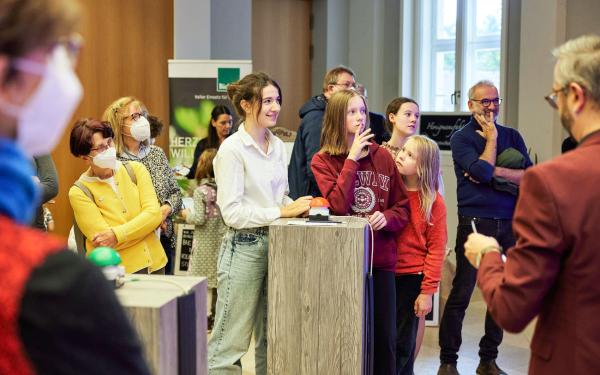
Germany's largest private science sponsor celebrated its jubilee with many guests: The public was invited to join the big "Festival of Science" at Herrenhausen Palace in Hannover on October 1, 2022.
Disinformation, media fragmentation, instrumentalization of science – how can the facticity crisis be countered? One of the central research questions at the Rhine Ruhr Center for Science Communication Research (RRC).
The Munich Science Communication Lab is dedicated to the research topic "Planetary Health", which considers the health of both the planet and its human population.
Exploring science communication: The RHET AI Center
Is it possible to address the topic of artificial intelligence with objectivity and free of emotion? Researchers at the RHET AI Center are investigating the interests and images that shape the social perception and discourse surrounding the technology.
What we feel when we see: Artists, designers and researchers explore the emotional impact of visual representations in the new Kiel Science Communication Network.
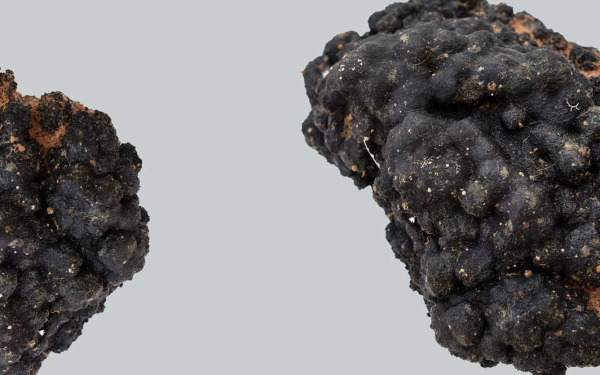
Manganese Nodules and Microorganisms: Life Fuelled by Radioactivity?
Radioactivity is generally considered harmful to life. Yet in manganese nodules in the deep sea, microorganisms might benefit from it. Or even live off it? This is the intriguing hypothesis that geoscientist Walter Geibert hopes to prove.
What happens in the brain when we are confronted with completely unknown things and situations? At TU Dresden, Christian Beste is researching what is known as the "unknown unknown". To do so, he is turning science on its head.