Newsroom

News 15 July 2020

Making good science even better

The Volkswagen Foundation is the only funding organization from Germany to become a member of the international "Research on Research Institute", whose ambitious mission is to optimize science cultures – worldwide.

News 08 July 2020

Next step for MOONRISE: Moon dust melted under lunar conditions

Even though the MOONRISE project has not yet arrived on the moon itself, it has now successfully completed an important step on the way there: For the first time, researchers were able to produce dense material under lunar conditions in the Einstein-Elevator in Hannover.

Cover des Jahresberichts 2019
Publication of the Foundation 26 June 2020

Annual Report 2019 (in German)

News 26 June 2020

Annual Report 2019 – an overview

Record year: With a total of 253.2 million euros, the Volkswagen Foundation has approved more funding in 2019 than ever before.

News 22 June 2020

About ants and water filters - video on nanotechnologies

Entertaining and informative: The young South African scientist Dr. Anita Etale explains the benefits of nanotechnologies.

Menschen in Bangladesh auf der Straße
Story 17 June 2020

Responsibility – following the Rana Plaza disaster

Since the collapse of the Rana Plaza textile factory, occupational safety in Bangladesh has improved – according to the results of a Foundation-funded study. But what will remain if the politicians don't keep at it?  

Stories

Foto einer einzelnen Manganknolle
Story 15 July 2026

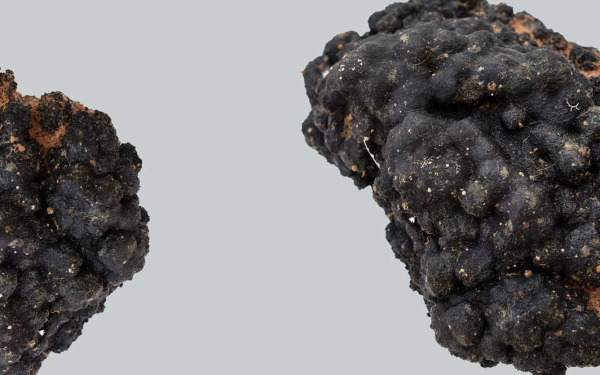
Manganese Nodules and Microorganisms: Life Fuelled by Radioactivity?

Radioactivity is generally considered harmful to life. Yet in manganese nodules in the deep sea, microorganisms might benefit from it. Or even live off it? This is the intriguing hypothesis that geoscientist Walter Geibert hopes to prove.

Satellitenansicht der Innertropischen Konvergenzzone
Story 09 June 2026

Climate Research Using Old Ship’s Logs: the Wind Leaves no Trace on the Sea

Did a volcanic eruption in 1783 shift the tropical rain belt? Old ship’s logs could provide the answer – and also shed light on the future climate for millions of people living around the equator.

Mastodon