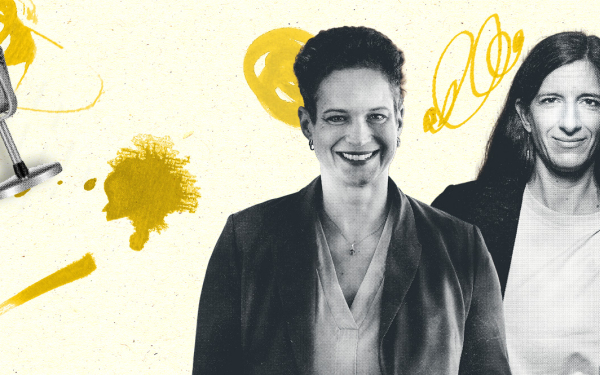
A small, rich minority is becoming increasingly wealthy. Eva Wegner and Miquel Pellicer ask: How does politics contribute to growing economic inequality – and whose interests do MPs actually represent?
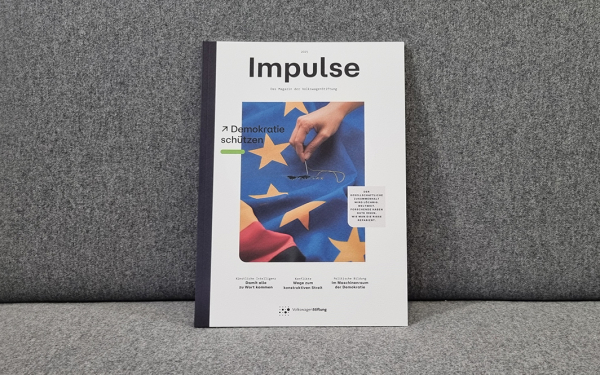
Research for democracy: funding programme for cooperation projects
How do democracies change in the face of global challenges? And what can science contribute to their resilience? Researchers and stakeholders outside of academia are to develop answers in cooperation projects funded by the Volkswagen Foundation for up to five years. Nora Kottmann and Cora Schaffert-Ziegenbalg present the programme.
Transformational Knowledge on Democracies under Change – Transdisciplinary Perspectives
The programme addresses persons from science together with actors outside of academia who are interested in transdisciplinary research and aim at jointly developing new perspectives on democratic forms of government under change.
Academic Freedom Index 2025: Academic freedom has declined in 34 countries
The growing influence of anti-pluralist parties is often accompanied by a decline in academic freedom in the respective country. This is one of the findings of the latest Academic Freedom Index (AFI). It covers 179 countries worldwide.
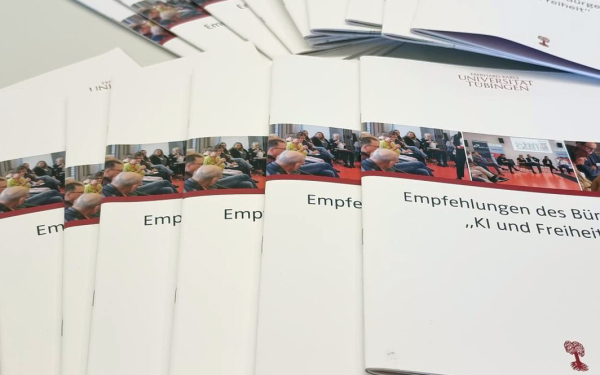
So that everyone can have their say: Citizens' assembly on AI research
Rhetoric expert Anika Kaiser researches how people can make themselves heard on the major issues of our time – artificial intelligence (AI) being a case in point. She is the right person to take care that this grassroots democratic process does not remain too detached from reality: in her first life, she trained as a painter.
Democracies under pressure: 14 million euros to research how to overcome the crisis
The foundation has brought together researchers from the humanities, cultural studies, and social sciences, as well as practitioners from outside academia, to develop new ideas and solutions for making democracies more resilient.
A Pharmacy From the Rainforest: Remedies for the Mind
Fabien Schultz is searching for natural materials that can be used to treat mental health conditions. To this end, he is working with indigenous communities in Uganda and Tanzania – and with monkeys.
Wolfram Pernice is researching how computers based on neural networks could in future compute even faster and more efficiently – using light instead of electronics. And real nerves instead of optical fibres.