Research Into Democracies in Transition: 14.3 Million Euros for Eleven Transdisciplinary Projects
The Volkswagen Foundation is now supporting eleven new research projects on topics such as cyber violence, gender equality, Muslim family law and far-right interpretations of history, amongst others.
Transformational Knowledge on Democracies under Change – Transdisciplinary Perspectives
The programme addresses persons from science together with actors outside of academia who are interested in transdisciplinary research and aim at jointly developing new perspectives on democratic forms of government under change.
Protest movements: How do they affect democracies in Europe?
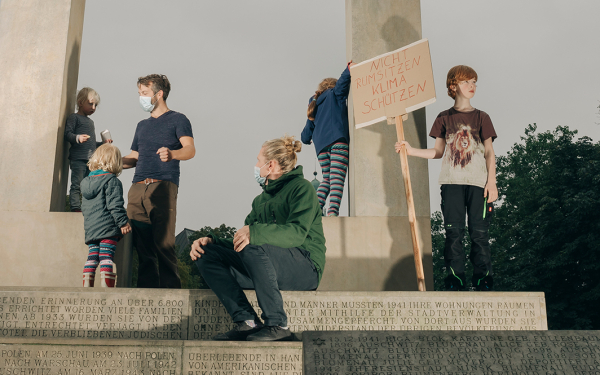
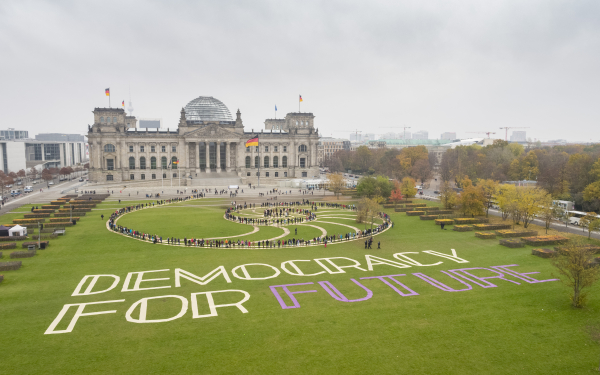
Election victories for authoritarian parties, demonstrations against the right, Fridays for Future and increasing populism: democracies in Europe are coming under pressure. The "ProDem" project has analysed the impact of protest movements on the development of democracy in six European countries.
From citizens' councils to feminism on TikTok – task forces investigate democracies in transition
Liberal democracy is a basic prerequisite for a scientific landscape with independent freedom of research. But how can we protect our democratic structures? And what dangers are they exposed to? Ten newly funded research projects are dedicated to these and other highly topical questions of democracy research.
Disinformation, media fragmentation, instrumentalization of science – how can the facticity crisis be countered? One of the central research questions at the Rhine Ruhr Center for Science Communication Research (RRC).
The Munich Science Communication Lab is dedicated to the research topic "Planetary Health", which considers the health of both the planet and its human population.
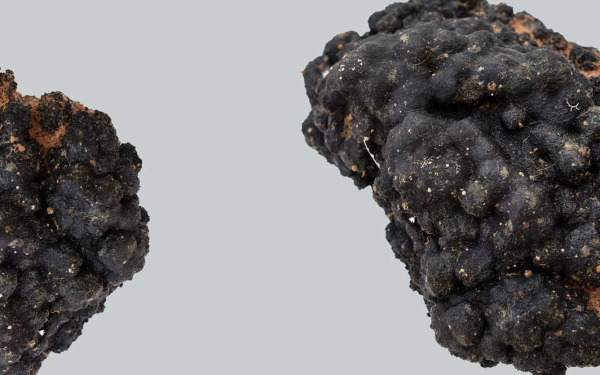
Manganese Nodules and Microorganisms: Life Fuelled by Radioactivity?
Radioactivity is generally considered harmful to life. Yet in manganese nodules in the deep sea, microorganisms might benefit from it. Or even live off it? This is the intriguing hypothesis that geoscientist Walter Geibert hopes to prove.
What happens in the brain when we are confronted with completely unknown things and situations? At TU Dresden, Christian Beste is researching what is known as the "unknown unknown". To do so, he is turning science on its head.